« Older Entries Subscribe to Latest Posts

2 Jan 2026

Unravelling the mysteries of the social world

Posted by jofr. No Comments

Mind vs Matter

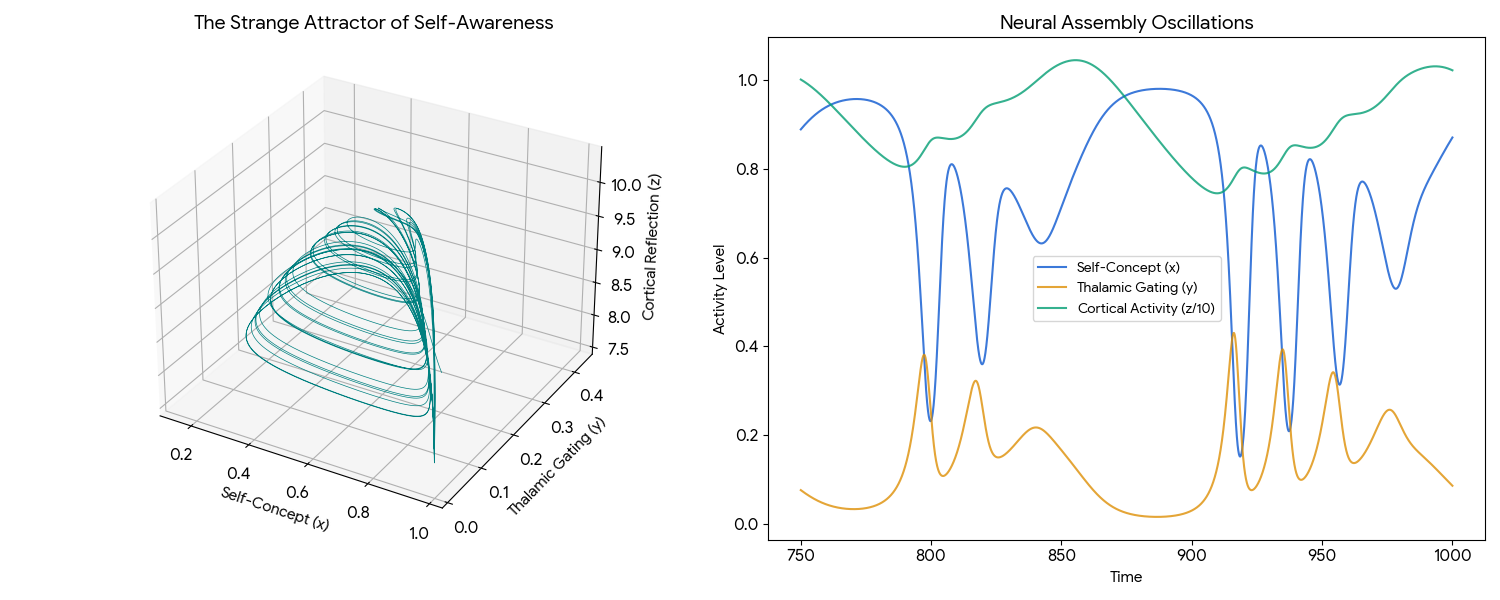
In his book “Putting Ourselves Back in the Equation: Why Physicists Are Studying Human Consciousness and AI to Unravel the Mysteries of the Universe” [1], George Musser defines the inside/outside problem as a fundamental tension between the third-person description of the objective world that physical science traditionally seeks to explain and the first-person perspective of an embedded, subjective observer which is only available to the observer himself.

How is the inside/outside problem related to the classic distinction between physical reality (matter) and mental ideas (mind)? This is a deep question philosophers have discussed since Descartes (“I think, therefore I am”) for centuries. Descartes’ dualism says that the mind is a non-physical, thinking substance, and the body a physical, extended substance. They would be two fundamentally different kind of things, yet able to interact.

Philosophers like Gilbert Ryle argued there is no such thing as two substances, no ghost in the machine [2]. But we certainly have a distinction between the matter in our head, which we can not easily access or observe, and the matter in the outside world, which we can study and measure objectively. The points of interaction are of course simply the sense organs which transform the light and sound waves that describe the outside world into electric pulses and patterns inside our brains. And our muscles which convert electric pulses back into physical movement. The mind is obviously related to all the inside stuff, encoded in the neurons and synapses inside our brains, and the physical reality is related to the outside objects.

The hard problem is to cross the boundary between inside and outside, if we try to understand the first-person view in others (the hard problem of subjective consciousness which we have discussed a number of times) or the third-person view of ourselves (related to self-awareness and the problem of free will, which we also discussed recently). From this point of view the two fundamental problems of the hard problem of subjective consciousness and problem of free will are related, because we have to cross the inside/outside boundary in both cases.

Explaining and understanding our inner experience requires to cross the inside/outside boundary of inside experiences and outside objects. Language in spoken and especially in written form that our minds are able to master after years of learning and school education allows us to cross the inside/outside boundary. No new physics required. Only new machines to make it easier to cross from one side to the other: we know them well. First we witnessed the emergence of writing systems in ancient civilizations, then the first books, the first novels and early theaters, after the invention of the printing press much more books, and eventually cinemas and TV screens. They all allow us to share our experiences and to synchronize our knowledge of the world.

Cinemas as frame synchronization tools

Cinema and TV screens can be considered as the windows where we can observe the actions and perceptions of someone else. They are frame merging or frame sharing devices: for the time of the movie we and the leading actor experience the world through the same set of synchronized frames. This allows us to transcend the inside/outside boundary that seperates the inner world of subjective experience and the outer world of physical events.

What does frame mean in this context? In the social sciences, framing is a set of concepts and theoretical perspectives on how individuals, groups, and societies organize, perceive, and communicate about reality. It is about selecting certain parts of an event or product and neglecting other. Mikael Klintman defines framing like this [3]:

“Framing is the automatic or strategic process of selecting, shaping, interpreting, and organizing a part of our complex reality into a bounded construction that may affect both our own and others’ understanding and actions.”

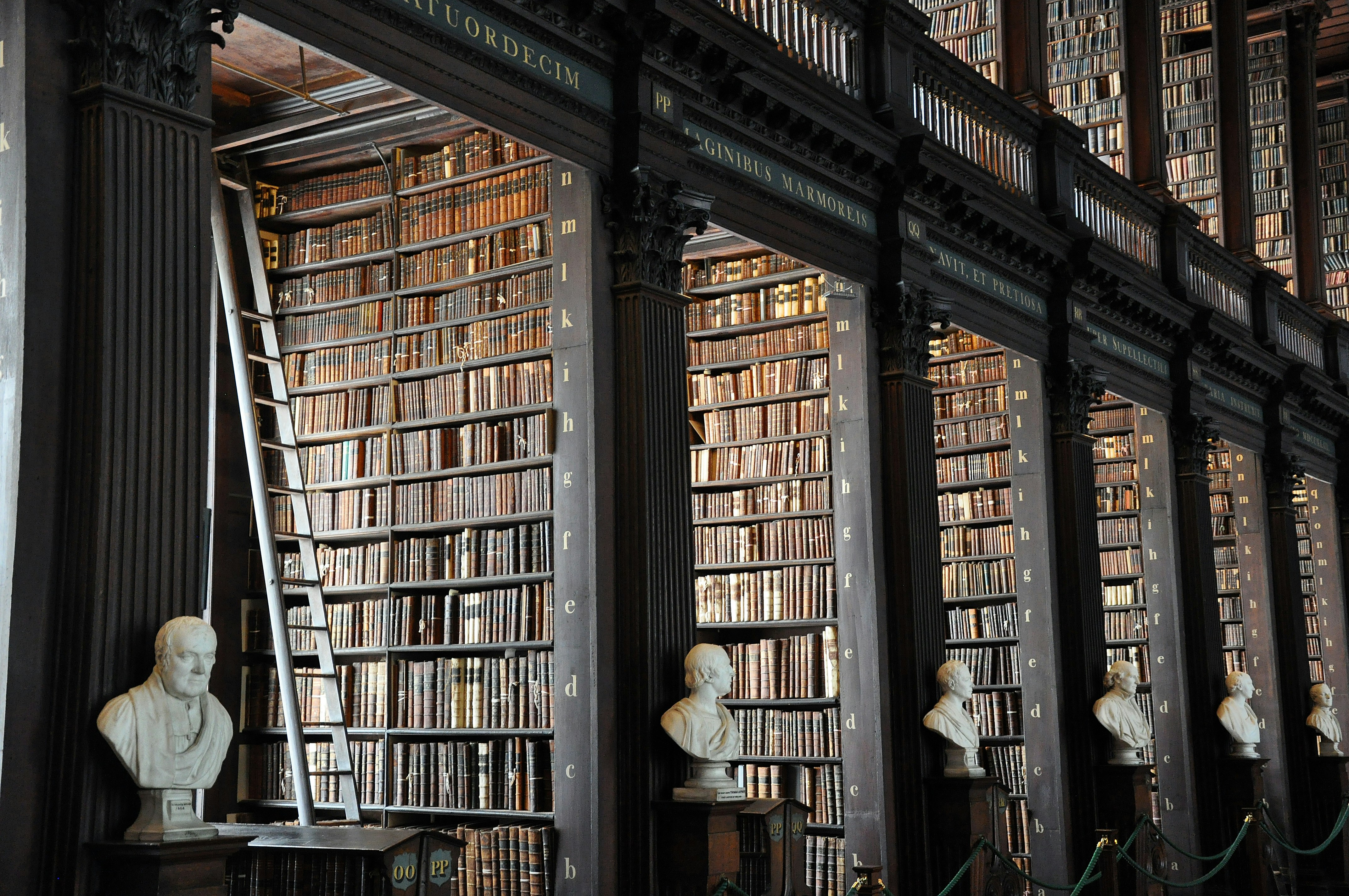
Each of us has a experiences a certain set of frames through which we have perceived and experienced reality. The frames determine our viewpoint. They can distort our view like a brand.

Cinemas make the frames of other accessible to their viewers. They are fascinating for us because normally the character and personality of a person is not observable. It is only known by family and friends. In this sense a personality is a windowless substance, as Leibniz called it. Cinemas open windows which let us peer into the life of others: we start to understand their subjective experience and witness how their personalities and characters are formed by witnessing how they react to challenges and difficulties.

They have this magic capability because they are able to cross the inside/outside boundary mentioned in the beginning. Film cameras capture like sensory organs physical forms and their movements, transform them into electric pulses and patterns, and store them in encoded form in some kind of medium. Film projectors like motor organs and muscles transform the patterns back into physical forms and their movements.

Book References

[1] Putting Ourselves Back in the Equation: Why Physicists Are Studying Human Consciousness and AI to Unravel the Mysteries of the Universe, George Musser, Oneworld Publications, 2025

[2] The Concept of Mind, Gilbert Ryle, University of Chicago Press, 1949

[3] Framing – The social art of influence, Mikael Klintman, Manchester University Press, 2025

Photo References

Unsplash photos:
Equation photo by Vitaly Gariev, Frame photo by Pine Watt, Cinema photo by Toni Pomar

14 Sep 2025

The big unsolved questions

Posted by jofr. No Comments

The Santa Fe Institute (SFI) is an independent research institute located in Santa Fe, New Mexico. The institute was founded in 1984 by a group of physicists, mainly from the nearby Los Alamos National Laboratory, which is best known for its central role in helping develop the first atomic bomb. Murray Gell-Mann and George Cowan were two of the co-founders. The SFI tries to tackle the big questions in an interdisciplinary way, by bringing together scientists from different disciplines in one place.

After they have shattered matter to the smallest possible pieces to find the elementary particles, the physicists who founded the institute wondered how particles can interact to give rise to complex forms of matter. Let us say we found the smallest building blocks of matter, whether fermions and bosons or quarks and leptons, then the question is how do more complex forms emerge on top of it? How do complex forms emerge from simple rules in general? Is glass for example an amorphous solid or a supercooled liquid? The question of emergence came up. It is related to the principles of swarm intelligence – how macroscopic patterns result from microscopic interactions – and the question of downward causation in the other direction from top to bottom.

The lectures at the institute are about these questions:

Readers of this blog will have noticed many of these fundamental questions have been discussed here as well. So is there is a mysterious principle of swarm intelligence or strange form of emergence which explains how simple rules and elements result in complex patterns?

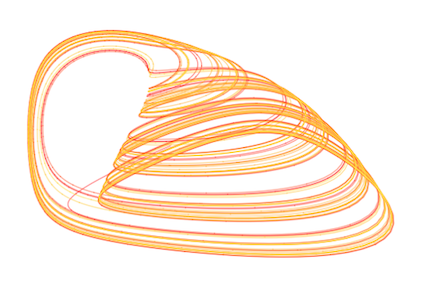
Well, there are simple rules that explain simple patterns of swarm behaviour, like “stay close to the group but keep a distance from individuals” which is enough to form a group. We know the strange attractors from chaos theory that can be observed in certain types of non-linear systems. Overall the number of different strange attractors is limited, though, and their complexity as well. We know only a handful of attractors like the Rössler attractor or the Lorenz attractor which arise from different ways orbits in phase space are merged and folded.

If we look at Wolfram’s cellular automata rules [1] than the more regular ones like rule 50 display a stable blinking pattern which does does not change much because it constantly repeats itself, while the more complex forms like rule 110 display an unstable patterns which changes frequently. Swarms of animals like flocks of birds or fish swarms form quickly but also dissolve quickly again.

Swarms are fascinating to us because they are flexible like a liquid and yet made of solid elements. The swarm as a whole seems to be possess qualities – like the flexibility to change its shape and to adapt the shape to the environment – that can not found in its individual components, but rather arise from their interaction. It is the combination of elements and rules, of particles and forces, of actors and interactions, that results in more complex form of organization. But in the end a swarm is just a group of individuals, and while it may be smarter then the individuals it can not understand language or write a book about the history of maritime life in the ocean. It will usually take some kind of spherical form in one way or another, and as quickly as such a swarm can form, it can also dissolve again.

Stronger forms of emergence which are more complex AND durable seem to require a new code or language, either in the bio-chemical language of DNA or in other forms of languages. As I try to explain in my book [2] these codes exist in form of hidden genes which are not alway recognized as what they are. Most of them are simply laws we obey or rules we live by [3] which have become so familiar that we no longer think about them and take them for granted. As I wrote earlier in one of the articles about free will the solutions to the biggest questions can often be found in the most ordinary things hiding in plain sight – which is no accident, because our deepest believes and oldest institutions reflect to a certain degree our most fundamental problems.

Our oldest institutions are an answer to the big unsolved questions we as humans have tried to solve for thousands of years. The theaters and cinemas which solve the question of time travel and subjective experience – what it is like to be someone else (in a different place or at a different time). The temples, mosques and churches solve the question of mortality and meaning. They form groups out of loosely coupled individuals, allowing them to find meaning as part of a larger group and to find comfort in the face of inevitable death.

[1] Stephen Wolfram, A New Kind of Science
[2] Jochen Fromm, Hidden Genes
[3] Lorraine Daston, Rules: A Short History of What We Live By

( Swarm pictures are from Unsplash users Hioko Yoshii and Claus Giering )

13 Sep 2025

Non-Renewable means Limited

Posted by jofr. No Comments

Our (post-)industrial society is addicted to consuming non-renewable resources, to fossil fuels in form of coal, gas and oil. We use them to get from A to B in our cars, trucks, ships and planes, to heat our homes in the cold seasons, to generate nitrogen-based fertilizers, to generate light and to power our electronic devices.

Billions of car engines and household heatings are consuming oil and gas which has been created over millions of years. Because these fossil fuels have been generated over millions of years, they have a high energy density and are hard to replace. Ed Conway writes in his book “Material World” [1]

“Coal has about twice the energy density – in other words the amount of energy that can be released per kg of weight – of wood. Kerosene, refined from crude oils, has nearly twice the energy density of coal. And a higher energy density means you can carry less fuel and go greater distances”

The relentless exploitation of fossil fuels and non-renewable resources enabled our modern capitalistic societies to function in the last decades. But even very simple models show that the society as we know it can not last long. Drug addicts know that the repeated consumption of the drug will ruin their lives, but they are consuming them anyway. For us it is similar: we know that the addiction to oil and gas will ruin the world we live in, including the climate, but we are doing it anyway.

I have asked claude.ai to create a very simple model which describes resource depletion, energy generation and pollution over time. As more and more resources are consumed to generate energy, the pollution goes up, until the resource is depleted and the pollution reached its maximum. It is perhaps the most simple way to model the exploitation of non-renewable resources. If the exploitation is happening through exponential growth even giant amounts of resources can be turned quickly into waste and pollution.

Try it yourself here (It works best on a desktop screen, not on a small mobile screen. The HTML and JS source code should be simple to understand). The collapse in this model when the resources have been deleted happens quite quickly in a few years after peak production is reached. It uses exponential growth. If we consider that the modern capitalistic economy is based on exponential growth, it is obvious that even very large amounts of non-renewable resources can be exploited and totally depleted in a short time, in logarithmic time complexity O(log n). The biggest oil fields like the Ghawar oil field in Saudi Arabia, the Prudhoe Bay oil field in Alaska and the Cantarell oil field in Mexico are in fact already past their peak of production, the North Field gas field in Qatar is not far away from its peak.

If we do not want to turn our planet into a giant junkyard [3] while destroying the climate and making it uninhabitable, we need to use renewable energy in a sustainable economy [4]. There does not seem to be another way. Asked for a simple model of a sustainable resource, claude.ai suggested logistic functions where we have eventually an equilibrium of consumption and regeneration:

You can try this model here. Basically these two models correspond to the models M212 (“Exploitation of resources”) and M214 (“Sustainable use of renewable resources”) in Hartmut Bossel’s book [5] from 30 years ago. We knew all of this for a long time, at least since the first “Limits to Growth” research 50 years ago. And yet like an addict our society is unable to change.

[1] Ed Conway, Material World, WH Allen, 2023
[2] Donella H. Meadows et al, Limits to Growth
[3] Adam Minter, Junkyard Planet, Bloomsbury Press 2013
[4] Eklas Hossain and Slobodan Petrovic, Renewable Energy Crash Course: A Concise Introduction, Springer, 2021
[5] Hartmut Bossel, Modellbildung und Simulation (in German), Vieweg, 1994

25 Aug 2025

Metaphors, the equations of the mind

Posted by jofr. 2 Comments

In his book Critique of Pure Reason the German philosopher Immanuel Kant tried to seek the limits of pure reasoning. What can you hope to achieve using pure words, or in other words, what is the scope of ordinary language philosophy? Back then it was a terribly serious adventure and in some places it still is, in Oxford for instance or at other places where science is taken seriously [1].

If we use mathematics in science it is clear what we hope to find: a mathematical theory which describes nature accurately in a precise and reproducible way. We use mathematical proofs and logical reasoning and hope to find a new equation that explains everything, like the Schrödinger equation in Quantum Theory or the Maxwell equations in classical physics.

If we use mere words it is more difficult. We could invent a new word to describe an object, like a word for this green Gecko, but all possible animals and objects in the physical world already have a name and a new name would be idiosyncratic as long as only the person who has invented it is using it.

Or we could use words to describe relationships between objects: which objects are similar or related, and which are not. Similar objects are put into the same class, different objects in different classes, until we get a hierarchy of related classes. In other words you could invent a new classification or new taxonomy, like the names for species in biology.

The best thing you can achieve using ordinary language philosophy is to find a new metaphor that explains everything. Well known examples are the ghost in the shell (Ryle), the selfish gene (Dawkins), natural selection (Darwin), etc. Why is this the best we can hope to achieve? Lakoff & Johnson have argued convincingly [2] that a metaphor is not just a figure of speech used in literature, but a fundamental way how we understand abstract things. Any coherent theory to explain the world based on pure text has to use metaphors because only they enable people to use what they know about the physical world to understand more abstract objects and complex things.

Take for example natural selection which is the cornerstone of the theory of evolution. It is a metaphor from Charles Darwin: like the breeder who selects the best suited individuals, nature selects the best fitted species. The selfish gene is a similar metaphor from Richard Dawkins and the title of the book that explains it [3]. Dawkins argued genes act like selfish individuals who only use the bodies they have created to lever themselves into the next generations. They both have been extremely successful, partially because the metaphors they have found are so powerful. Nicholas S. Thompson and David Sloan Wilson used the natural selection metaphor from Darwin and shifted it to the group level [4][5]. They all relied on metaphors.

Many religious terms are metaphors too, for example Bread of Life or Tree of Life, to name just a few. Thus the priest who explains the metaphors from his ideology to his followers and the professor who explains the metaphors from his theory to his students are similar. As long as the academic theory is based on text, not mathematical calculations and equations, they both merely explain metaphors to their audience. The difference between priest and professor is of course that the priest like the teacher is no longer looking for new laws, because all important laws have already been revealed, while research professors and prophets are constantly looking for new laws, theories and metaphors to explain the world even better.

Are metaphors the equations of the mind? If intentionality is the mark of the vital [6], then one could say metaphors are the mark of understanding. They are the holy grail of ordinary language philosophy and mark the boundary of what we can hope to understand using pure words.

[1] A terribly serious adventure, Nikhil Krishnan, Profile Books Ltd, 2023

[2] Metaphors We Live By, George Lakoff and Mark Johnson

[3] The Selfish Gene, Richard Dawkins

[4] Darwin’s Cathedral, David Sloan Wilson

[5] Shifting the Natural Selection Metaphor to the Group Level, Nicholas S. Thompson

[6] Intentionality is the mark of the vital, Nicholas S. Thompson and Patrick G. Derr, In F. Tonneau & N. S. Thompson (Eds.), Perspectives in ethology, Vol. 13. Evolution, culture, and behavior (pp. 213–229). Kluwer Academic Publishers.

Unsplash photo of the Gecko from Rapha Wilde

24 Aug 2025

The Limits to Growth 50 years later

Posted by jofr. No Comments

In this SFI talk Dennis Meadows mentions an important aspect that deserves more attention: he says ( at 22:22 ) that people talk about climate change as if it is the only problem. We just solve this problem – say we limit the temperature increase to 1 or 2 degrees – and everything will be ok. Dennis Meadows says no, this is not the case, because climate change is just one consequence of a system where growth has exceeded the system limits. We pollute the ecosystem by all kinds of waste, not only by climate gases carbon dioxide (CO2) and methane (CH4), but also by sewage, PFAS (forever chemicals), nuclear waste, plastics and microplastics, and toxic wastewater from fracking.

Meadows and his coauthors have been warning us for 50 years. They argued convincingly in The Limits To Growth that as long as we have exponential growth in a limited system we will have overshoot and collapse. No matter where the limits are, exponential growth will reach them quickly. If we pass the limits we overshoot the boundaries of sustainable levels and eventually the system collapses through resource depletion and pollution. Fossil fuels are non-renewable. If they are used up, they are gone and will not come back. What remains are piles of waste which pollute the environment. If we have polluted our ground water and agricultural soil by fracking and nuclear waste, it will not be possible to clean it easily.

Ironically the original “Limits to Growth” study was supported by the Volkswagen Foundation by a significant amount of money. The same Volkswagen group that later caused the Dieselgate emissions scandal. The study did not predict the future, it presented a number of scenarios which have different outcomes. Overshoot and collapse are the inevitable result of the “business as usual” scenario in “Limits to Growth” simulations. The problem is so far we have been following more or less the “business as usual” scenario, and if we look at the US we are no longer in the “business as usual” scenario, we are in the “business as usual but even more extreme” version – if we think of the “Drill baby drill” slogan. The situation is even worse than the worst case. We are not only heading for collapse, we have increased the speed to get there.

If you think that a collapse is too farfetched then read the book from Pablo Servigne and Raphaël Stevens [2] or simply imagine Saudi Arabia would announce next month that their oil fields are depleted much faster than previously thought, like Mexico’s supergiant Cantarell oil field for instance, which Dennis mentions in his talk. A global panic and worldwide economic crisis would follow. 80 people in a village can not empty a supergiant oil field in a few years, but 8 billion on Earth can.

Dennis says at the end he used to be depressed about the gloomy outlook and the nature of our species – that we are not doing the fundamental changes we need to make to prevent a collapse although we could, and although we know what it is coming. He got used to it after decades of talking about it, and looking the longer history it might look less significant, but it is of course still frustrating to see the collapse of civilization coming.

In this video he compares our situation now that we have reached peak oil and the limits to growth with a rollercoaster: we have reached the top of the first hill and it is going downhill now. We have no longer control over the direction or the speed. All we can do is hold on and hope that we survive. He believes this is the situation for us on this planet.

[1] The Limits to Growth, Donella H. Meadows, Dennis L. Meadows, Jørgen Randers and William W. Behrens III

[2] How Everything Can Collapse: A Manual for our Times, Pablo Servigne and Raphaël Stevens, Polity Books, 2020

10 Aug 2025

Light and Darkness

Posted by jofr. No Comments

One of the mysteries of science is the question of bioluminescence [1]. Why do some ocean organisms light up? As Sönke Johnsen describes in his book “Into the Great Wide Ocean” [2] the open ocean far from the shore and miles above the seafloor is a vast habitat that is the home of peculiar and alien life forms like giant squids, transparent fish and bioluminescent anglerfish.

So why do some ocean organisms have the ability to create their own light? Well, because there is total absence of light in the deep sea at the bottom of the ocean. Sunlight does not penetrate the ocean beyond 1,000 meters. The majority of the ocean, below that depth of 1,000 meters, is characterized by complete darkness and tremendous pressure. The deeper you go, the darker it beomes, and below 1 km there is no light anymore.

One way to adapt to the darkness which does not allow any vision is the use of sound to locate objects based on their echoes. Sperm whales are well adapted to deep-sea diving and use echolocation to locate prey in the perpetual darkness. Another way is bioluminescence, which is also an adaptation to the perpetual darkness of the deep sea.

Just like sunglasses are an adaptation to too much light, creating your own light is an adaptation to too little light. Light helps to find food and mates in the darkness. Remember if anything is happening in nature it is usually either supper or pairing time. The bioluminescent octopus, the firework jellyfish, the angler fish and other animals living in the deep see use bioluminescence for this purpose [3].

The firework jellyfish which is shown in the video above has a spectacular and stunning appearance that resembles a burst of fireworks. It lives at depths of 1,200 to 1,500 meter where the eternal darkness begins. Some jellyfish who are able to generate light live near the surface (where it can be useful in the night), for example the crystal jellyfish, but bioluminescence is more common in the deep sea where light begins to fade. Already Charles Darwin observed that the ocean at some places can glow in the dark:

While sailing in these latitudes on one very dark night, the sea presented a wonderful and most beautiful spectacle. There was a fresh breeze, and every part of the surface, which during the day is seen as foam, now glowed with a pale light. The vessel drove before her bows two billows of liquid phosphorus, and in her wake she was followed by a milky train. As far as the eye reached, the crest of every wave was bright, and the sky above the horizon, from the reflected glare of these livid flames, was not so utterly obscure, as over the rest of the heavens.

[1] The Where, the Why, and the How: 75 Artists Illustrate Wondrous Mysteries of Science, Jenny Volvovski, Matt Lamothe, Julia Rothman

[2] Into the Great Wide Ocean: Life in the Least Known Habitat on Earth, Sönke Johnsen, Princeton University Press, 2024

[3] The Radiant Sea, Steven Haddock, Sönke Johnsen, Abrams Books, 2025

Tags: , ,

26 Jul 2025

You can only discover things once

Posted by jofr. No Comments

You can only discover countries like America or theories like General relativity or Quantum theory once. What happens if all of the low hanging fruits in a field have already been picked and you still have to publish new discoveries, because you want to keep your well paid job at the university? The situation is similar to car manufacturers which need suddenly to obey strict rules for lower and lower emissions for cars although they only can build cars based on fossil fuels. Faced with this impossible task they often start to cheat, like Volkswagen in the Volkswagen Dieselgate scandal. Cheating as an adaptation to insurmountable obstacles.

Academic researchers, scientists and professors who work in scientific fields where it is almost impossible to find out new things tend to become cheaters and tricksters. Not all of them, but some.  They have to become good in pretending they have found out something, although they have not. For example by clever marketing or by hiding their lack of insights behind nonsense, buzzwords and bullshit [1].

By forcing their members to publish something new even if they have not found out something the academic system actually turned from a system that tries to make sense of the world into a system which produces nonsense – which is ironically the opposite.

The situation reminds me of an old folk tale named Krabat [2]. In the version told by the German writer Otfried Preußler there is an old mill. Preußler is mainly known for his wonderful children books, but this story is rather dark. The master of the mill is an evil sorcerer who has made a deal with the devil. He must sacrifice each year one of his apprentices, or he will perish himself. His apprentices work mainly to keep him from doing that, and every year one of them is sacrificed to keep the master alive. One of these apprentices is the main character Krabat, a young boy who joins the mill, uses what he has learned to resist the master and ultimately defeats him with the help of his love for a village girl, thereby finding freedom and breaking the spell.

It is a little bit similar to an academic professor who is sacrificing each year one of his students, isn’t it? The students help him doing his daily, dirty work of pretending to have gained new insights, but in the end they will perish like the students before them. Just like the master of the mill in the folk tale Krabat the professor destroys the lives of his students to keep his own.

It could be avoided if publishing is no longer absolutely mandatory, and teaching remains the main job of university professors. Nikhil Krishnan says this was the case in the philosophy department at Oxford University in better days. In chapter 10 he writes:

“Oxford philosophers saw themselves primarily as teachers, not as writers. With secure jobs from which only the most grotesque wickedness could get them sacked, they didn’t need to write (or “publish”) unless they felt they had something to say. In some other places the staff are in danger of spoiling ther chances of promotion, or even further employment, unless the keep up a constant output of published writing. Well, Oxford was not like that. (This is no longer true)”

If researchers only need to publish things if they really found out something then the quality of publications and research in general would be much better, and we would have certainly less bullshit.

[1] On Bullshit, Harry Frankfurt, Princeton University Press, 2005
[2] Krabat, Otfried Preußler, 1971
[3] A terribly serious adventure, Nikhil Krishnan, 2023

( Unsplash photo of a windmill by Roman Bilokrynytskyi )

22 Jul 2025

The movie of our own life

Posted by jofr. No Comments

Did you know that the big, hard and profound problems in philosophy are related to big, existing businesses? In the last four posts we have seen how the hard problem of free will is related to the big business of PR, marketing and advertising.

The hard problem of consciousness is related to nothing else but the show business and film industry in Hollywood and elsewhere. Why can a cinema or a movie theater be seen as a machine to understand the profound and fundamental question what it is like to be someone else? Let us try to recapitulate.

To use the words of Roger Ebert everybody is born unwillingly inside the movie of his own life. Each of us is stuck inside his or her own movie. Roger writes “I was born inside the movie of my life. The visuals were before me, the audio surrounded me, the plot unfolded inevitably but not necessarily. I don’t remember how I got into the movie, but it continues to entertain me” [1]. In short we are the main actors and spectators in the movie of our own life.

Apparently cinemas allow us to view the movie of other lives. We are fascinated by movie theaters and cinemas because everybody is stuck in his own movie, and they allow us to see how the other movies look like – or in other words what it is like to be someone else. While the movie of someone’s life is not the real life, it brings us as close as we can get to it, especially if it is well made. Roger Ebert said “Art is the closest we can come to understanding how a stranger really feels.”

Vivian Sobchack argues that a films in a movie theater does not just display reality – it presents a world that invites our embodied participation. She says for a brief moment “we forget ourselves in our interest in another’s vision of the world” [2]. By perceiving the vision of the world from someone else they bridge the gap between our own subjective “movie” and the “movies” of others. She argues the film experience provides empirical insight into the nature of that embodied vision we each live daily as both “mine” and “another’s.

Vivian Sobchack writes [2]

“The cinema thus transposes what would otherwise be the invisible, individual, and
intrasubjective privacy of direct experience as it is embodied into the visible,
public, and intersubjective sociality of a language of direct embodied experience.”

And this is what the hard problem of consciousness is all about: understanding how a stranger really feels [3]. There might be no single “Cartesian theater” where consciousness happens as Daniel Dennett has argued [4], BUT theaters are the place where the hard problem of consciousness is solved. Movie theaters are machines built to solve it. Approximately.

Because a cinema

  • enables immersive storytelling:
    The physical setup of a cinema – the darkened room, the large screen filling the field of vision, the powerful sound which surrounds the viewer – is designed to minimize external distractions and maximize immersion in a different world, the world of the main actor in the story that is being told. By understanding the story step by step we understand what it is like to be someone else. A cinema and the movie it shows allow us to step into someone else’s shoes, and follow his steps.
  • changes our perspective:
    We see the world from the point-of-view of somebody else, through the eyes of the actors, and this allows us to share their emotions. We feel their fear, joy, sorrow, and confusion. Cinemas brings us as close as possible to the subjective reality of other persons. They allow us to bridge the gap of subjectivity by giving us the opportunity to perceive the experiences of a 3rd person from the 1st person point of view. Thereby we can experience a subjective perspective that the real world normally does not offer.
  • provides us a window into different worlds:
    Cinema allows us to step into the shoes of people from different cultures, socio-economic backgrounds, historical periods, or even future times. It provides a window into “what it’s like” to be a refugee, a hero, a soldier, a researcher or a scientist, someone struggling with an illness, a person of a different race or gender, or someone facing an impossible moral dilemma. These are experiences we might never have in our own live

What does the movie of your life look like? Hopefully exciting, original and creative 😉

If we think about it, then it is not surprising that the deep, fundamental questions that everybody cares about have led to big businesses, large organizations and huge corporations. People care about these questions because they are interested in them, and because so many people care about them, they are obviously a big opportunity to make lots of money.

References

[1] “Life Itself : A Memoir by Roger Ebert (2011)
[2] The Address of the Eye: A Phenomenology of Film Experience, Vivian Sobchack, 1992
[3] “The Conscious Mind: In Search of a Fundamental Theory” by David J. Chalmers (1996)
[4] “Consciousness Explained” by Daniel C. Dennett (1991)

Unsplash photo of a movie roll by Denise Jans, photo of a cinema by Toni Pomar

6 Jul 2025

Free will – Indirect proof?

Posted by jofr. No Comments

This is part 4 in the series of articles about the classic problem of free will. Part 1 argued that free will is valuable because it is the treasure that everybody wants to take away. Part 2 looked at aspects of the hard problem. Part 3 described the philosophical explanations of Robert Nozick and Harry Frankfurt. After we investigated all these famous philosophers part 4 leads us back to letter D for Daniel Dennett – where it started in the first part. This part tries to give an indirect proof of free will.

English philosopher P.F. Strawson has shifted the debate about free will towards a debate about moral responsibility. He has argued in his essay “Freedom and Resentment” [1] that moral responsibility is a basic practice of our social life where we hold each other responsible, based on our social emotions like resentment, anger, pride, shame, praise, and blame. His essay has been so influential that whole books [2] are written over it.

Basic emotions like fear (helps us to avoid dangerous situations), disgust (helps us to get rid of unhealthy food), and hunger (helps us to search for food) help to maintain the integrity of our body. Bad feelings are, as discussed earlier, adaptations to bad situations and thereby good for us. Social or moral emotions like sorrow, sadness, resentment, anger, outrage, pride, shame, remorse, guilt or gratitude help to maintain the integrity of our social fabric, i.e. they are essential for the fabric of human relationships.

Moral emotions arise though social interactions. Adam Smith wrote about moral emotions in 1759 (in [3]), Charles Darwin in 1871 (in [4]), and recently Robert Frank in 1988 (in [5]) and Jonathan Haidt in 2003 (in [6]). Adam Smith saw gratitude and resentment as important moral emotions because they help to maintain social order. Darwin saw moral emotions as evolved traits, shaped by natural selection to help humans live, cooperate, and thrive in complex social environments. He writes “the first foundation or origin of the moral sense lies in the social instincts”. Later they have been supplemented by a personal “conscience” which became “the supreme judge and monitor” of social behavior, causing shame, remorse, regret and guilt. He says regret and shame are caused by the consciousness of wrong behaviour and writes [4]

“At the moment of action, man will no doubt be apt to follow the stronger impulse; and though this may occasionally prompt him to the noblest deeds, it will more commonly lead him to gratify his own desires at the expense of other men. But after their gratification when past and weaker impressions are judged by the ever-enduring social instinct, and by his deep regard for the good opinion of his fellows, retribution will surely come. He will then feel remorse, repentance, regret, or shame; this latter feeling, however, relates almost exclusively to the judgment of others. He will consequently resolve more or less firmly to act differently for the future; and this is conscience; for conscience looks backwards, and serves as a guide for the future.”

In chapter 7 “The evolution of moral agency” of his book “Freedom Evolves” Dennett draws heavily on the work from Robert Frank [5], and quotes for instance this paragraph which says that “Moral sentiments may be viewed as a crude attempt to fine-tune the reward mechanism, to make it more sensitive to distant rewards and penalties in selected instances”. Jonathan Haidt goes a step further and argues that moral emotions are not only fine-tuning of an existing reward mechanism, they are a reward mechanism for a new system, because they are about “the interests or welfare either of society as a whole or at least of persons other than the judge or agent” [6].

In this new social system which Haidt mentioned the freedom of the agents is “both their greatest strength and their greatest problem”, to use the words of Dennett [8]. It is their greatest strength because they can be much stronger if they cooperate, and their greatest problem because they can decide to cheat and deceive. What is needed is therefore some kind of social alert if someone is cheating or deceiving others – which is one function of the moral emotions.

And here we come back to Peter Frederich Strawson who says moral emotions are essential since they regulate our relationships and shape how we hold each other responsible. He calls them “reactive attitudes” because they cause us to react in certain situations in specific ways. Other expect us to act in certain ways depending on our relationship. We are morally responsible if we meet the expectations of others or break them. For example family members and friends are supposed to help each other. If a friend promises me to help because I move to a new apartment, and on the day of the move nobody shows up, then I will probably feel resentment against him, because he broke his promise, and he will feel guilty, because he promised to help but did not.

As Daniel Dennett argues in his two books on free will “Elbow Room” [7] and “Freedom Evolves” [8], we have free will because we are free in all the ways that matter, even if our actions might be determined to a certain degree or caused by other events. Because we are free we can keep or break promises. We can try to be a friend or not. We can help or refuse to help. And we hold individuals, especially our family and friends, accountable for their actions because they possess the cognitive machinery to understand the implications of their choices and because they could have acted differently had they chosen to. Social emotions help us to do that.

The fact that these moral emotions evolved at all – especially emotions like remorse, repentance, regret, or shame which Darwin described so well – implies we have the practical freedom to choose what we want to do (or at least who we want to become). They help us to hold others accountable which does not make sense if nobody is accountable because everybody has no choice. Let us say we have no free will. Then the social emotions would not work or would not make sense. They make sense because we think we – and others – could have acted differently. Consider for example the case of the friend who refuses to help. He feels guilty because he know he could have acted better. I feel resentment or anger because I know he could have acted better. If there is no free will then these feelings make no sense, and we have a contradiction, because we know they exist.

Therefore it can be considered as evidence of free will. In other words the very existence of the social and moral emotions is strong evidence of free will. Maybe even an indirect proof? In part 1 we have argued the existence of a whole industry (PR, marketing and advertising) that tries to influence our free will is compelling evidence for its existence. The same can be said of moral emotions who influence our free will from the other, biological side. The very existence of moral emotions can be considered as evidence of free will. They would not have evolved if we would not have free will which allows us to form new systems. Systems for which we need new control and reward mechanisms.

Viewed differently we could also say that moral emotions are an adaptation to a world where people have free will – including the will to cheat, to deceive or to defraud others. Strawson says “Our practices do not merely exploit our natures, they express them” [1]. They express that we see ourselves as agents who hold each other accountable because we have the free will that matters – to decide in each moment if we want to follow our selfish interests or want to respect moral obligations.

[1] P.F. Strawson, “Freedom and Resentment and Other Essays”, Taylor & Francis, 2008
[2] Pamela Hieronymi, Freedom, Resentment, and the Metaphysics of Morals, Princeton University Press, 2020
[3] Adam Smith, The Theory of Moral Sentiments, 1759
[4] Charles Darwin, The Descent of Man, 1871
[5] Robert H. Frank, Passions within Reason – The Strategic Role of the Emotions, W.W. Norton & Company, 1988
[6] Jonathan Haidt, The moral emotions. In R. J. Davidson, K. R. Scherer, & H. H. Goldsmith (Eds.), Handbook of affective sciences. Oxford University Press (2003) pp. 852-870
[7] Daniel C. Dennett, Elbow Room – The Varieties of Free Will Worth Wanting, The MIT Press, 1984
[8] Daniel C. Dennett, Freedom Evolves, Viking books, 2003

( First Unsplash photo by Giammarco Boscaro and second photo by Alex Block )

3 Jul 2025

Free will – philosophical explanations

Posted by jofr. No Comments

This is part 3 in the series of articles about the classic problem of free will. Part 1 argued that free will is valuable because it is the treasure that everybody wants to take away, especially people from the PR, advertising and marketing worlds. Part 2 looked at aspects of the hard problem. In part 3 we will have at look at the philosophical explanations of two American philosophers, Robert Nozick (1938-2002) and Harry Frankfurt (1929-2023).

Harry Frankfurt was a philosopher at Princeton University, Robert Nozick a philosopher at Harvard University. Nozick’s doctoral advisor Carl Gustav Hempel was a German philosopher who emigrated to the U.S. because his wife was of Jewish ancestry. Like Daniel Dennett and Gilbert Ryle he tackled the big, fundamental questions using ordinary language philosophy, for example in his book “Philosophical Explanations” from 1981. It has a chapter about “Free Will” which Daniel liked. Let us have a look at it.

Nozick argues that in each moment we try to detect the best possible action in the current situation, given the hierarchy of desires, principles, and intentions which reflect our personality and our character. He says “we always do what we most prefer” and calls this “tracking bestness” [1], which means to detect the best choice of action giving a system of values. What we perceive as good and bad depends of course on our emotions, but also on the social and moral systems that have shaped us, i.e. by our character.

The character of a person is defined by a hierarchy of desires, directives, principles, and intentions which reflect the personality and the character of this very person. An altruistic and pious person for instance will value moral laws higher than a selfish and vicious person. What you care about – this could be beauty for an artist, honesty for a scientist, accurateness for a perfectionist, or fairness for an altruist – is essentially your self, encoded in a hierarchy of volitions. The self is a complex structure that channels causal chains in a way that reflects the person’s identity. Nozick says “Our principles fix what our life stands for, our aims create the light our life is bathed in, and our rationality, both individual and coordinate, defines and symbolizes the distance we have come from mere animality” [2].

Free will according to Nozick is possible because there is a connection between the agent’s self and the action. The key is here the process of reflecting, endorsing, and identifying the desires and principles which guiding the own actions. By agreeing with the higher-order directives and principles that control the causal chain of action an agent can identify itself with the source of the acts. Nozick calls this “acts in equilibrium”. If an agent does not endorse the hierarchy it can refuse to act. Nozick describes this situation as “acts in disequilibrium”.

Harry Frankfurt calls such a refusal to act a second-order volition against that first-order desire [3]. He argues we do not just have desires, but care about which desires move us. What makes us persons is that we do not just have desires, but we are able to care about which desires move us. He calls it a second-order volition, and describes a second-order volition as a desire that a certain desire be one’s will. He regards nonhuman animals and very young children without second-order volitions as agents which follow their instincts and desires blindly (either without being aware of them or without questioning them), and calls them “wantons”.

For Nozick, freedom of the will is basically the freedom to choose what kind of persons we want to become and which way we want to go in our life. We can shape our own character and form our personality gradually through our actions and choices, and this self-forming capacity for conscious self-formation is what makes us morally responsible and eventually free. The more our personality grows in a certain direction, the more it shapes our actions in this way.

This makes only sense if we can choose what persons we want to be. At least in principle it is possible, because we can certainly more or less influence who we become, but of course it can be difficult in practice to change the own character for all the reasons mentioned in part 2 and because self-control is not an easy problem [4]. Nozick calls the process of choosing a person we want to be “self-choosing”. He says “the fullest autonomy is had only by a being whose essence is self-choosing”.

Robert Kane calls the essential parts of this process “self-forming actions” in his book “The Significance of Free Will” [5]. “Self-forming actions” (SFA) help to form the character of the agent and help to set new directives or intentions. Kane writes “SFAs must be ‘will-setting'” [5]. Both Nozick and Kane agree that even if our actions are determined by our character, these actions can be free to a certain extent if we are able to shape and form our own character. These “self-made selves” (in the words of Daniel Dennett [6]) explain how we can be moved by “causal chains of events” and yet have the freedom of choice.

Nozick says what matters is how the self stands in relation to the causal chains that control our action. When the agent reflects, endorses, and identifies with the desires and principles guiding the action, and it “acts in equilibrium”, then there is a close connection between the self and the action.

Harry Frankfurt says this equilibrium is reached when your first-order desires align with your second-order volitions – i.e. when you want what you want to want – and then we are authentically and wholeheartedly ourself. He argues what we care about is important: we have free will because we care about our will. Frankfurt says “A person’s free will is free only if he is free to have the will he wants” [3]. Nozick would agree.

[1] Philosophical Explanations, Robert Nozick, Harvard Univ. Press, 1981
[2] The Nature of Rationality, Robert Nozick, Princeton Univ. Press, 1993
[3] The importance of what we care about: philosophical essays, Harry G. Frankfurt, Cambridge Univ. Press, 1998
[4] Surrounding Self-Control, Alfred R. Mele (Ed), Oxford Univ. Press, 2020
[5] The Significance of Free Will, Robert Kane, Oxford Univ. Press, 1999
[6] Daniel C. Dennett, Elbow Room – The Varieties of Free Will Worth Wanting, The MIT Press, 1984

( The Unsplash photo of a trail is from user Erin O’Brien, the Lightbulb picture is from Pixaybay user qimono )