
6 Jul 2025
Free will – Indirect proof?
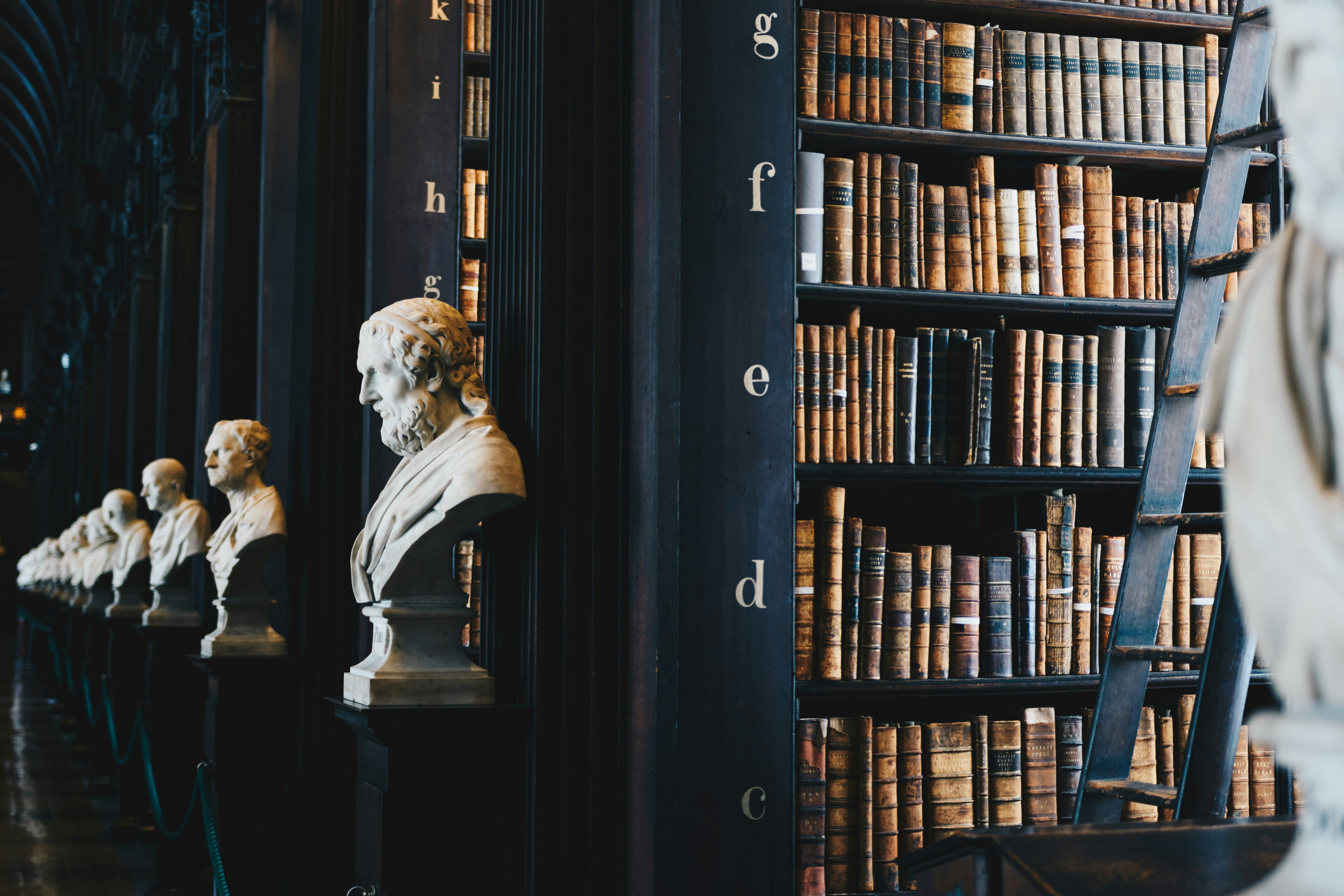 This is part 4 in the series of articles about the classic problem of free will. Part 1 argued that free will is valuable because it is the treasure that everybody wants to take away. Part 2 looked at aspects of the hard problem. Part 3 described the philosophical explanations of Robert Nozick and Harry Frankfurt. After we investigated all these famous philosophers part 4 leads us back to letter D for Daniel Dennett – where it started in the first part. This part tries to give an indirect proof of free will.
English philosopher P.F. Strawson has shifted the debate about free will towards a debate about moral responsibility. He has argued in his essay “Freedom and Resentment” [1] that moral responsibility is a basic practice of our social life where we hold each other responsible, based on our social emotions like resentment, anger, pride, shame, praise, and blame. His essay has been so influential that whole books [2] are written over it.
Basic emotions like fear (helps us to avoid dangerous situations), disgust (helps us to get rid of unhealthy food), and hunger (helps us to search for food) help to maintain the integrity of our body. Bad feelings are, as discussed earlier, adaptations to bad situations and thereby good for us. Social or moral emotions like sorrow, sadness, resentment, anger, outrage, pride, shame, remorse, guilt or gratitude help to maintain the integrity of our social fabric, i.e. they are essential for the fabric of human relationships.
Moral emotions arise though social interactions. Adam Smith wrote about moral emotions in 1759 (in [3]), Charles Darwin in 1871 (in [4]), and recently Robert Frank in 1988 (in [5]) and Jonathan Haidt in 2003 (in [6]). Adam Smith saw gratitude and resentment as important moral emotions because they help to maintain social order. Darwin saw moral emotions as evolved traits, shaped by natural selection to help humans live, cooperate, and thrive in complex social environments. He writes “the first foundation or origin of the moral sense lies in the social instincts”. Later they have been supplemented by a personal “conscience” which became “the supreme judge and monitor” of social behavior, causing shame, remorse, regret and guilt. He says regret and shame are caused by the consciousness of wrong behaviour and writes [4]
“At the moment of action, man will no doubt be apt to follow the stronger impulse; and though this may occasionally prompt him to the noblest deeds, it will more commonly lead him to gratify his own desires at the expense of other men. But after their gratification when past and weaker impressions are judged by the ever-enduring social instinct, and by his deep regard for the good opinion of his fellows, retribution will surely come. He will then feel remorse, repentance, regret, or shame; this latter feeling, however, relates almost exclusively to the judgment of others. He will consequently resolve more or less firmly to act differently for the future; and this is conscience; for conscience looks backwards, and serves as a guide for the future.”
In chapter 7 “The evolution of moral agency” of his book “Freedom Evolves” Dennett draws heavily on the work from Robert Frank [5], and quotes for instance this paragraph which says that “Moral sentiments may be viewed as a crude attempt to fine-tune the reward mechanism, to make it more sensitive to distant rewards and penalties in selected instances”. Jonathan Haidt goes a step further and argues that moral emotions are not only fine-tuning of an existing reward mechanism, they are a reward mechanism for a new system, because they are about “the interests or welfare either of society as a whole or at least of persons other than the judge or agent” [6].

In this new social system which Haidt mentioned the freedom of the agents is “both their greatest strength and their greatest problem”, to use the words of Dennett [8]. It is their greatest strength because they can be much stronger if they cooperate, and their greatest problem because they can decide to cheat and deceive. What is needed is therefore some kind of social alert if someone is cheating or deceiving others – which is one function of the moral emotions.
And here we come back to Peter Frederich Strawson who says moral emotions are essential since they regulate our relationships and shape how we hold each other responsible. He calls them “reactive attitudes” because they cause us to react in certain situations in specific ways. Other expect us to act in certain ways depending on our relationship. We are morally responsible if we meet the expectations of others or break them. For example family members and friends are supposed to help each other. If a friend promises me to help because I move to a new apartment, and on the day of the move nobody shows up, then I will probably feel resentment against him, because he broke his promise, and he will feel guilty, because he promised to help but did not.
As Daniel Dennett argues in his two books on free will “Elbow Room” [7] and “Freedom Evolves” [8], we have free will because we are free in all the ways that matter, even if our actions might be determined to a certain degree or caused by other events. Because we are free we can keep or break promises. We can try to be a friend or not. We can help or refuse to help. And we hold individuals, especially our family and friends, accountable for their actions because they possess the cognitive machinery to understand the implications of their choices and because they could have acted differently had they chosen to. Social emotions help us to do that.
The fact that these moral emotions evolved at all – especially emotions like remorse, repentance, regret, or shame which Darwin described so well – implies we have the practical freedom to choose what we want to do (or at least who we want to become). They help us to hold others accountable which does not make sense if nobody is accountable because everybody has no choice. Let us say we have no free will. Then the social emotions would not work or would not make sense. They make sense because we think we – and others – could have acted differently. Consider for example the case of the friend who refuses to help. He feels guilty because he know he could have acted better. I feel resentment or anger because I know he could have acted better. If there is no free will then these feelings make no sense, and we have a contradiction, because we know they exist.
Therefore it can be considered as evidence of free will. In other words the very existence of the social and moral emotions is strong evidence of free will. Maybe even an indirect proof? In part 1 we have argued the existence of a whole industry (PR, marketing and advertising) that tries to influence our free will is compelling evidence for its existence. The same can be said of moral emotions who influence our free will from the other, biological side. The very existence of moral emotions can be considered as evidence of free will. They would not have evolved if we would not have free will which allows us to form new systems. Systems for which we need new control and reward mechanisms.
Viewed differently we could also say that moral emotions are an adaptation to a world where people have free will – including the will to cheat, to deceive or to defraud others. Strawson says “Our practices do not merely exploit our natures, they express them” [1]. They express that we see ourselves as agents who hold each other accountable because we have the free will that matters – to decide in each moment if we want to follow our selfish interests or want to respect moral obligations.
[1] P.F. Strawson, “Freedom and Resentment and Other Essays”, Taylor & Francis, 2008
[2] Pamela Hieronymi, Freedom, Resentment, and the Metaphysics of Morals, Princeton University Press, 2020
[3] Adam Smith, The Theory of Moral Sentiments, 1759
[4] Charles Darwin, The Descent of Man, 1871
[5] Robert H. Frank, Passions within Reason – The Strategic Role of the Emotions, W.W. Norton & Company, 1988
[6] Jonathan Haidt, The moral emotions. In R. J. Davidson, K. R. Scherer, & H. H. Goldsmith (Eds.), Handbook of affective sciences. Oxford University Press (2003) pp. 852-870
[7] Daniel C. Dennett, Elbow Room – The Varieties of Free Will Worth Wanting, The MIT Press, 1984
[8] Daniel C. Dennett, Freedom Evolves, Viking books, 2003
( First Unsplash photo by Giammarco Boscaro and second photo by Alex Block )