25 Dec 2008
Meet Emily
Here is an almost lifelike simulation of a character. Remarkable high quality facial animation! It works with a kind of facial motion capture. The source was a real actress. The times online had an article on it.
Complex Adaptive Systems Group
25 Dec 2008
Here is an almost lifelike simulation of a character. Remarkable high quality facial animation! It works with a kind of facial motion capture. The source was a real actress. The times online had an article on it.
25 Dec 2008
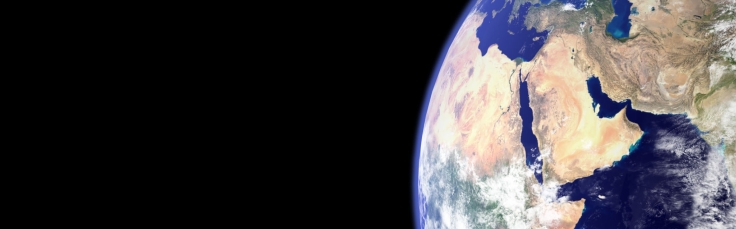
The Earth from space is always an impressive and amazing image. Here are two nice photos from exactly 40 years ago. The first is the first image taken by humans of the whole Earth. Photographed by the crew of Apollo 8, the photo shows the Earth at a distance of about 30,000 km. South is at the top, with South America visible at the covering the top half center, with Africa entering into shadow. North America is in the bottom right.

The second image is a photo taken 40 years ago by Apollo 8 crewmember Bill Anders on December 24, 1968, showing the Earth seemingly rising above the lunar surface. Note that this phenomenon is only visible from someone in orbit around the Moon. Because of the Moon’s synchronous rotation about the Earth (i.e., the same side of the Moon is always facing the Earth), no Earthrise can be visible from the surface of the Moon.

(text and images from wikipedia)
25 Dec 2008
Richard Feynman talks about the importance to take a look at the world from another point of view. He was one of the physicists who tried to find the ultimate constituents of the world. I guess the ultimate constituents of the world are not some of rigid particles. Either they emerge from nothing, like a whirl, eddy or attractor, or they evolve together with the universe, or both. But this is only a guess.. (the film is the first in a series of four: Part 1, Part 2, Part 3, and Part 4)
25 Dec 2008


23 Dec 2008
Dr. James Hansen, NASA’s Goddard Space Institute Director, is predicting that we are heading to a point of no return, a catastrophic tipping point of the Earth climate, if we continue to burn all available fossil fuels. He calls it the Venus syndrome. On page 23 of his lecture he says:
“The Earth’s climate becomes more sensitive as it becomes very cold, when an amplifying feedback, the surface albedo, can cause a runaway snowball Earth, with ice and snow forming all the way to the equator. If the planet gets too warm, the water vapor feedback can cause a runaway greenhouse effect. The ocean boils into the atmosphere and life is extinguished. The Earth has fell off the wagon several times in the cold direction, ice and snow reaching all the way to the equator. Earth can escape from snowball conditions because weathering slows down, and CO2 accumulates in the air until there is enough to melt the ice and snow rapidly, as the feedbacks work in the opposite direction. The last snowball Earth occurred about 640 million years ago.” Now the danger that we face is the Venus syndrome. There is no escape from the Venus Syndrome. Venus will never have oceans again.”
 This scenario is maybe a bit exaggerated: oceans existed on earth long before life and at a much higher level of CO2. But at the time, 3-4 billion years ago, the Sun may have been weaker, too… And I believe that global warming in its worst form combined with burning of all fossil fuels could in fact be a severe threat to the existence of human life on earth. The oxygen in the air is basically a pollution of the atmosphere caused by life itself. Originally, there was little O2 in the atmosphere, but much CO2. As a study reports, CO2 was more than 10 to 200 times today’s level 1.4 billion years ago. If life can produce oxygen, it can also consume it again. When all fossil fuels are burnt and the last rainforest vanishes, then obviously this would change the composition of the atmosphere: the amount of CO2 increases while the amount of O2 decreases. In earth’s atmosphere there is now 20% oxygen and 0.039% (390 parts per million or ppm) carbon dioxide. If the ratio would be reversed, then no higher life forms would be possible.
14 Dec 2008
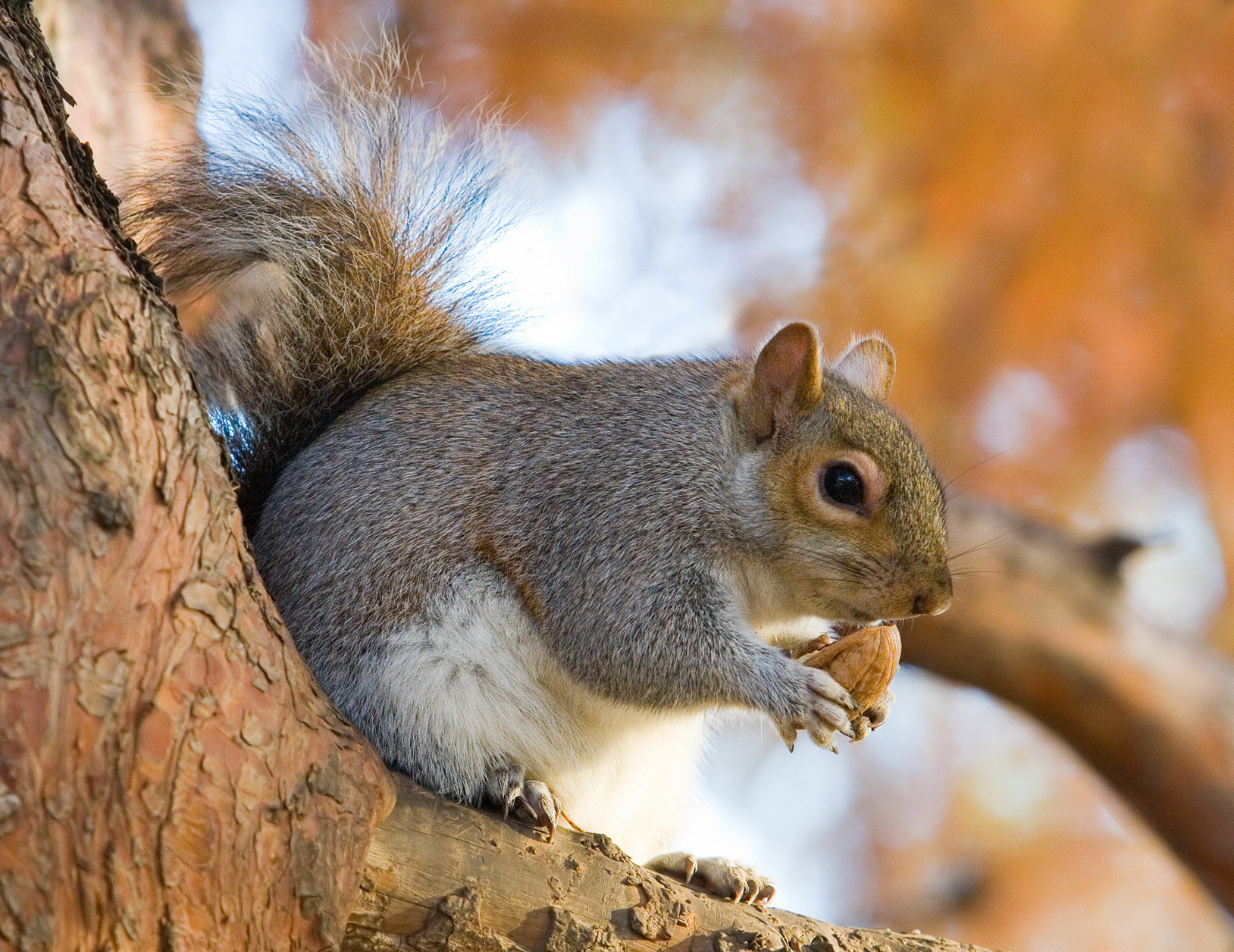 Intelligence, learning and large brains are an adaptation to fast changing environments with unusual, novel or complex challenges, where a small number of fixed responses and rigid reflexes is no longer useful. Intelligence is the ability to understand and profit from experience. Large brains obviously facilitate this ability, they also support the creation of novel responses and altered behavioral patterns. A squirrel for example is blind, helpless and naked when it is born. If it is grown-up, it shows very intelligent behavior: if there is an abundance of food the squirrel will store it for the future, it will also hide the food in many places, so if another squirrel or animal were to find it, the entire year’s supply would not be lost. Obviously this is a smart behavior adapted to an environment where the abundance of food is changing frequently (like the fat storage mechanism, which is also a good adaptation to environments where food can become rare from times to times).
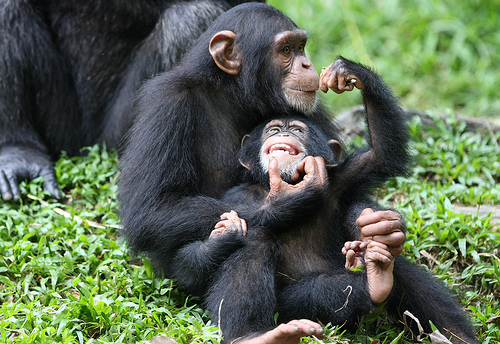 The most intelligent animals can be found in ever changing complex environments, where all kinds of small and large catastrophes happen. The most complex plant in our solar system is certainly the earth, and the most intelligent animals which have survived all small and large catastrophes are mammals. Among the Mammals, the most intelligent ones are hominids living in small social groups characterized by strong social relationships and sophisticated communication. These groups are complex environments for each member. Mammals are very complex and intelligent animals characterized by (1) independence in interdependence, (2) consciousness in unconsciousness, and (3) conformance in non-conformance
Mammals are the most intelligent animals, they show the most complex behavior, and they are the ones who are best adapted to change and changing conditions. In short, intelligence is an adaptation to change. H.G. Wells said in his novel “The Time Machine”:
“intellectual versatility is the compensation for change, danger, and trouble […] There is no intelligence where there is no change and no need of change. Only those animals partake of intelligence that have meet a huge variety of needs and dangers”
Credit: The squirrel picture is from Wikpedia, the picture of the chimpanzee group is from the Flickr user shiny things
14 Dec 2008
I do like this new SF film with Keanu Reeves, esp. the scene with John Cleese. John Cleese takes over the role of Professor Barnhardt, a Nobel scientist. Together with the alien visitor he scribbles scientific equations on a blackboard and tells him afterwards “I have so many questions to ask you..”. Nice rendering of swarms and good SFX.