« Older Entries Newer Entries » Subscribe to Latest Posts

15 Oct 2011

Emergence and Engineering

Posted by jofr. 2 Comments

Introduction

The relationship of emergence and engineering is paradox. Emergence is the essence of computer science and IT, since it all emerges from binary digits, 0 and 1, and yet it is barely used in programming and software engineering. Although essentially all software is emergent, the concept of emergence is traditionally avoided in software engineering and computer science. There are only a few applications which are based on emergence among autonomous entities. Why?

The situation

The apparent lack of any computational system based on autonomous entities results partially from our limited ability to comprehend complex systems, and from our fear that these systems get out of control. Emergent properties can be found in computer science, but only at the edge in the following subfields: Multi-agent systems, complex systems, distributed systems, distributed artificial intelligence, artificial life, .. Our inability to handle complex systems with multiple interacting autonomous actors has lead us to consider only a narrow fraction of all possible systems. Modern computers are essentially very primitive machines. In every computer there is a single CPU which processes information serially, based on the simple Von Neumann architecture. As the brain or the internet shows, multiple nodes which interact which each other in real time can be much more powerful, but they are also much more difficult to construct and to understand, especially with our limited mathematical tools.

Computers are not that sophisticated, and they do not use autonomous entities in any form. If something is based on emergence in computer science, it is often not mentioned directly, because it is mainly an intended and “nominal emergence”. The only thing which emerges is the purpose of the machine or the function of the program. Other unexpected properties and unintended behaviors are nearly always bugs, faults or failures. Engineers have a top-down view, they prefer to speak in terms of code, information, and implementation instead of emergence and supervenience.

The blind spot of the engineers is their top-down focus. Outgoing from the function and the specification of the system, they try to construct the implementation. Engineers know the only thing which can emerge is the one they implement. This can be a feature if it is done right, or a bug if it is done wrong. The blind spot in the eye is the point where we can not see, because our view and our optical nerve originates here. The view of the engineer always originates from the function of the application. What is the function and the purpose of the application? How can we achieve it? The blind spot of the engineer is that there a systems where patterns emerge which have may have no function at all. An engineer does not how to handle such a system.

In his paper The reductionist blind spot, Russ Abbott has emphasized that the “reductionist blind spot” is a problem in general. According to Abbott, the reductionist blind spot is to neglect levels of abstractions by reducing everything to the elements. These levels of abstractions are entities of their own. Software engineers are very aware of different levels of abstraction. If they program in Ruby, they know Ruby is written C, and C in Assembler, and Assembler in Machine Code, and in the end everything they write is translated into Machine code. Yet they do not have to bother about the details of Machine Code for different processors, because the compilers and interpreters already do it for them. They have internalized that a low level implements a higher level of abstraction, and they operate mostly on the highest possible level of abstraction to make their work as easy as possible.

While the blind spot of the reductionist is that there are higher levels at all, the blind spot of the enigneers is that the lower level not only implements the higher level, but the higher level also emerges from the bottom, and this pattern is only a tiny fraction of all patterns which can emerge if we allow more freedom and autonomy. The neglected bottom-up view that emergent properties emerge from the lower level is traditionally suppressed because it is too difficult, and diametrically opposed to the function-oriented view of engineering. Yet emergence and implementation can be considered as two sides of a coin, a flock emerges from a number of boids, but the boids also implement a “flock”, etc. Emergent properties can be described as a high level abstraction which is implemented by low level elements.

The problem

Another aspect of the blind spot is that in the software world there are no mysteries. Christos Papadimitriou, CS Professor at UC Berkeley says in this Dr.Dobbs interview

“In computer science, we don’t have great mysteries.
We want to solve problems, but it’s not like we have
mysterious objects we don’t understand. It’s not like
Physics, which has the Universe, or Economics, which
has the Markets, Neuroscience has the Brain, and
Biology the Cell. For us, the computer and its software
are huge, complex, powerful, and fascinating, but we
constructed them. Intrinsically, there’s very little
mystery.”
~ Christos Papadimitriou

There are no mysteries, because we do not allow them. A system which is not understandable is unmanageable. The price for the manageability is that our systems are primitive and a bit boring. In systems with emergent properties, it is exactly this “mystery” aspect which makes the system interesting. The unpredictability of emergent properties is fascinating for scientists who want to explain a system but frustrating for engineers who want to control it. The basic problem is not only the reductionist blind spot, but also the inherent difficulties in combining autonomy and application.

Self-organization and emergence can be fascinating and frustrating at the same time. Impressive emergent properties are rare, complex patterns which result from very simple rules are rather the exception than the rule. This rarity makes them fascinating for scientists, but frustrating for engineers. Self-organization and emergence can be fascinating if we can observe wonderful patterns in simulations, frustrating if we have to find a function or purpose for them. They can be fascinating if something organizes and designs itself, frustrating if this organization and design does not fit our plans.

In general it is hard to reconcile organization, construction and design on the one hand with self-organization, emergence and autonomy on the other hand. There are two fundamental core problems, one basic contradiction on the level of the system (do we organize it, or can it organize itself?), and one basic contradiction on the level of the individual (does it what we want, or is it autonomous?).

The fundamental ESOA problem of engineering self-organizing systems or applications is to combine outside organization and self-organization, or engineering and emergence. Either a system organizes itself, or it is organized by us. How do I organize something which may organize itself? It is similar to the classic problem which dictators and despots like Gaddafi face: “the people should organize themselves, but I want to say how”.

The AOSE problem of agent-oriented software engineering is to combine autonomy and application. Either a system is autonomous, or it has a function. How do we control something, if it is autonomous and has an own will? How can we guarantee that a system with “free will” does what we want? The solution to both problems can be found in a trade-off: give up some control, grant more autonomy and let the system run, but impose some rigid constraints, basic rules and fundamental directives during a well-defined iterated process.

The solution

A possible solution to the ESOA problem is the application of the scientific method by the engineer, the step-by-step investigation of hypotheses with experiments and simulations to “find out the rules of the game”. The scientific method is an iterative process that is the basis for any scientific inquiry, and it can also be used to examine artificial systems and simulated worlds (for instance synthetic societies of multi-agent systems). The scientific method follows a series of steps: (1) identify a problem you would like to solve, (2) formulate a hypothesis, (3) test the hypothesis, (4) collect and analyze the data, (5) make conclusions and restart with (1) (see also the paper preprint On Engineering and Emergence).

The solution to the AOSE problem is to give the autonomous actors directives (in different degrees), like the directives of the robots in the film Wall-E. Wall-E has the prime directive to collect garbage, while EVE has the prime directive to search for organic life. Even the names mirror their purpose specified by the prime directive, the acronym Wall-E stands for small Waste Allocation Load Lifter – Earth Class, while EVE is the abbreviation of Extraterrestrial Vegetation Evaluator. As long as the autonomous entities follow these prime directives similar to Assimov’s classic laws of robotics, they are free to do what they want. The directives are a trade-off between the interests of the agent and the interests of the engineer, similar to the trade-off realized by a binding contract between employee and employer. These directives and guidelines can occur in different degrees, according to the standard subsumption architecture from Rodney Brooks. It is similar to the proof and verification of distributed algorithms: the prime directive guarantees the safety of the system, while the agility and curiosity of the actors granted by the autonomy must guarantee the liveness.

That means we must give up a bit of our total control and do not micro-manage machines and software in detail. We gain a much richer variety of behavior in return. As Kevin Kelly argued in his book “Out of control”, we can and should relinquish some of our total control. If we grant more freedom and autonomy for the system, then we lose a bit of control, but we gain a more powerful system.

Traditional programming and software engineering will not allow this modern approach based on emergence. Distributed systems are an exception. The web itself in fact emerged from millions of interacting nodes, and the PageRank (c) also emerges from the millions of links from one page to another.

Christos Papadimitriou says in the Dr.Dobbs interview about the web:

“In many ways, the Internet and the Web, we did not
create them. They arrived, appeared, emerged. All
these other artifacts, software, processers, and so
forth, there was a designer, a team, an entity that
intentionally built them. The Web emerged from an
interaction of millions of entities on the basis
of deliberately simple protocols. Thus the Internet
and the Web are our mysterious objects. Computer
scientists are looking at them the way other
scientists are looking at their mysterious objects. We
have to look at them using the scientific method:
observations, measurement, experiments, verifiable
theories, applied mathematics.”
~ Christos Papadimitriou

Conclusion

The resolution of the paradox mentioned in the introduction is the recognition that essentially all software is emergent; not none. Out computers so far only used the most simple forms. As Russ Abbott has pointed out, computer scientists and engineers have a certain reductionist blind spot and tend to ignore this fact. If we look beyond that blind spot, we can discover all kinds of interesting patterns and phenomena. We have outlined solutions for the core problems of combining emergence and engineering.

(The picture from EVE, the Extraterrestrial Vegetation Evaluator robot, is a low resolution screenshot from the highly recommendable Pixar film WALL-E)

3 Oct 2011

Aggressiveness as Adaptation

Posted by jofr. 4 Comments

“But what if life itself is evil?”
~ Vasily Grossman in “Life and Fate”

I wrote earlier about cultural stem cells. “Cultural stem cells” and “cultural tumors” (as I call them) may offer us interesting hints about biological ones. Fascism and some forms of organized crime for instance exhibit a kind of evolutionary meltdown across multiple evolutionary systems: economic, political, military, journalistic, legislative, religious,… For instance a single clan may govern a whole country, control politics and the economy, while having total military power. In the Nazi regime it was called Gleichschaltung. According to Victor Klemperer, it was the word for the process by which all organisations and associations existing in society were equalized and brought in line, opposing political parties and trade unions were suppressed or dissolved. In ancient times it was common that a clan may govern a region, while having complete religious, economic and military power. The ancient Egyptian or Minoan civilizations are an example. In modern times this is no longer the case. There is a separation of powers, the normal division of branches is into an executive, a legislature, and a judiciary branch. Church and state are usually separated.

In cultural tumors this clear separation seems to be missing. Religion and government are intertwined (for example in certain forms of fascism, nationalism or communism). Religious, legislative, military, economic, poltical, scientific and media systems are no longer clearly separated, because mass media is controlled, rights are repealed, science is suppressed, and elections are faked. A cultural tumor spans like an ancient precursor cell multiple evolutionary systems. It is like a relapse into earlier, more rudimentary and ancient forms of cultural evolution, with a lower degree of differentiation and specialization. William Gibson said “the future is already here – it’s just not evenly distributed”. The past is also here – and it’s also not evenly distributed. In each society there are small pockets which are very innovative, especially in new areas, hot spots, or melting pots, but there can also parts which are very conservative, antiquated or ancient. Usually these backward system parts are harmless: there is a reason why they have been replaced by more innovative ones. But they can be very dangerous, too, if they become very selfish and aggressive.

Since an ancient “cultural tumor” spans multiple systems, it will face many hostile reactions from multiple directions, like economic sanctions, political boycott, .. A cultural tumor is a crude mixture of many systems – political, religious, economic, military, etc – and it has to cope with reactions from many different systems. An environment usually reacts hostile to alien invaders, it may block nutrition supply, or attack them in multiple ways. An example are the economic sanctions on Japan from the USA just before WWII, which in turn was a reaction to the invasion of Japan in China. Franklin Roosevelt insisted on an oil embargo which triggered the subsequent attack on Peal Habor. Japan survived this threat in the short-term by extreme aggressiveness, like Germany it invaded and attacked even more regions to ensure the access to resources during WWII. In the long-term, it lead of course in both cases to the total destruction of the whole country.

I think the aggressiveness of some invasive, malicious tumors can be seen as an adaptation to a hostile environment. Only a hostile, aggressive system can survive in a hostile, competitive environment, where it has to face attacks from many different directions. Life itself only “survived” so long in the hostile environment of the early Earth where everything was subject to erosion and decay, because it is based on aggressive replication and reproduction. In this sense, replication is an adaptation against decay, dissolution and the ever increasing entropy.

What does this tell us? If cancer is an evolutionary disease, we can look at other evolutionary system for clues. The body is a highly differentiated, complex biological system. There is an protective immune system, a controlling nervous system, a digestive system, a circulatory system, and a reproductive system. If a biological tumor is similar to a cultural one, then it may span multiple systems as well. It uses similar genes, but they are connected and combined in a different way. It is likely a relapse into earlier forms of biological evolution, with a lower degree of differentiation and specialization. No approach is too absurd if it helps to gain us new insight about this terrible disease in order to fight it.

2 Oct 2011

The Mind-Body Problem

Posted by jofr. No Comments

Zwei Seelen wohnen, ach! in meiner Brust,
Die eine will sich von der andern trennen;
Die eine hält in derber Liebesöust
Sich an die Welt mit klammernden Organen;
Die andre hebt gewaltsam sich vom Dust
Zu den Gefilden hoher Ahnen

Two souls alas! are dwelling in my breast;
And each is fain to leave its brother.
The one, fast clinging, to the world adheres
With clutching organs, in love’s sturdy lust;
The other strongly lifts itself from dust
To yonder high, ancestral spheres.

~ Johann Wolfang von Goethe, Faust I, 1808

The mind-body problem is an old philosophical problem arising in the philosophy of mind. Thinkers, philosophers and poets like Johann Wolfgang von Goethe have thought about it for centuries. The problem arises because of the fact that mental phenomena appear to be qualitatively and substantially different from the physical bodies on which they appear to depend. In a recent discussion on the FRIAM list, Glen E. Ropella puts it like this: the mind-body problem is it’s the perplexing sense that there are parts of the body that seem to have little or nothing to do with the mind. And vice versa: there seem to be thoughts that have little or nothing to do with the body.

The cookie monster which enjoys only the taste of delicious cookies can not really comprehend the world of books, because dusty books are not very digestible. The raw desire for a fresh chocolate chip cookie or frozen blueberry yogurt seems to have little to do with the mind, and the abstract thought of a Calabi-Yau manifold in 6 dimensions seems to have little to do with the body. An example where we feel this perplexing sense would be a situation where body and mind contradict each other: for instance my body may say I should eat a frozen blueberry Yogurt now, but my mind says I should not because it contains too much sugar. Or my body says I should have sex with that beautiful woman, but my mind says I should not because I am married.

The desire to eat comes from my body, and I can feel it comes from the inside (in the last instance it comes from the genes who have built a system which craves for our building blocks sugar and fat). The rule to avoid too much sugar is clearly learnt. I can feel it comes from the outside if I recall the rule or listen to the “Super-ego”. As you know, Freud called the representation of the body which is responsible for the desire “id” (“das Es”), the representation of culture and mind “Super-ego” (“das Über-Ich”), and the mediator between both the ego (“das Ich”). Each of us has developed a complex personality which determines how Id and Super-ego interact to form the Ego. The sinner eats every Yogurt he can, the saint eats none at all and gives them away to the poor. The Tiger Woods or Bill Clinton type eats every Yogurt he can while pretending he has eaten only one.

Until we can explain this perplexing sense that there are parts of the body that seem to have little or nothing to do with the mind (and vice versa) the mind-body problem is not completely solved. It remains also unsolved as long as we can not explain how the mind emerges from the body, i.e. from the interactions of billions of knowledge molecules (“ideas”) and Yogurt cells. In the end, the interactions of course lead to a vast network of neurons which incorporate all available knowledge and which are made from Yogurt cells. The devil is in the details. I think the trick here is to consider the body and the environment, i.e. the adaptive body embedded in a certain environment. A human being is a complex object living in multiple worlds, it is as a biological organism a certain instance of nature which meets a certain instance of culture during development, and both instances come together to form a unique connection between both worlds.

The one world is the world of information, ideas, and imagination. The other world is the physical and biological reality based on amino acids and proteins. If both worlds collide, humans emerge. The collision of body and soul can be illustrated by a cookie monster who steps into a library. The abstract world of ideas and imagination is a strange place for the allegory or embodiment of hunger. A library has its own soul, it is full of ideas, stories and memories, while the cookie monster is only able to think about eating the next cookie. Cicero said “a room without books is like a body without a soul”. And an African proverb says “when an old man dies, a library burns to the ground”. And yet these different worlds of body and soul have something in common, reading is a bit like eating, and thinking like digesting. A body needs food, a mind information. A body can be hungry, a mind curious. Therefore we do like sweet and funny things, since sweet things are food for the body, and funny things are food for the mind (*). To be curious means to be “hungry for knowledge”. What would the opposite situation look like? Perhaps a Google crawler which walks into McDonalds.. The embodiment of curiosity steps into a place of food.. However, when universes meet and worlds collide, strange things happen. And so the cookie monster orders a book about cookies.. and a glass of milk, please.

I think the emergence of the mind – including the emergence of consciousness and self-awareness – is the most complex and most interesting form of emergence, and until we can explain it, we can hardly claim that the mind-body problem is solved. Likewise the biologists can not claim they have understood the genes until they can say how the body emerges from the instructions of the genes (how genes like the hox genes build the body, consecutively, in every detail). The Chinese know that the mind is made of many “knowledge molecules”. The Chinese word for intellectual is “zhi shi fen zi”. Zhi shi means knowledge, and fen zi means molecule. Thus intellectuals are people with many knowledge molecules. One of the big questions in Philosophy and Psychology seems to be how the mind emerges from the collision of “knowledge molecules” and “biochemical molecules” (aka Yoghurt), from the continuous interplay of memes and genes or nature and nurture.

Noch niemand konnt es fassen,
Wie Leib und Seel so schön zusammenpassen,
So fest sich halten, als um nie zu scheiden
Und doch den Tag sich immerfort zu verleiden

No one’s grasped how, each with either,
Body and soul can fit so well together,
Hold fast as if not to be separated,
Yet each by other daily vexed and hated.

~ Johann Wolfang von Goethe, Faust II, 1808

(*) We are wired up to enjoy sweet, funny and sexy things. We enjoy sweet and fat things because they provide us with basic building blocks for the body, aka sugar and fat. We enjoy funny things because they provide us with new nuggets of insight for the mind. We enjoy cute and sexy things because they provide us with material to maintain the species.

27 Sep 2011

Quantum Evolution

Posted by jofr. No Comments

I like the idea of Quantum Evolution. Why has nobody tried to combine Darwin and Einstein? Some have tried a similar approach, but maybe in the wrong context. Wojciech Hubert Zurek proposed a kind of Quantum Darwinism, a theory which should explain the emergence of the classical world from the quantum world as a process of Darwinian natural selection. Lee Smolin tried to invent a method by which evolution and natural selection might operate on the grandest possible scale, the cosmic scale. According to Smolin and his book “The Life of the Cosmos”, black holes can somehow span new universes. A universe is born in a black hole. Each black hole can lead to a new universe slightly different from the current one. Thus the theory contains the evolutionary ideas of “reproduction” and “mutation” of universes.

Why don’t we try to examine if there is a method by which evolution and natural selection operate on the smallest possible scale? I know it is far-fetched, but I think this is a wonderful idea. The basic idea is that the universe is evolutionary at the deepest level, let us say the Planck scale. Space would replicate itself at each timestep, time would be linked to the replication rate of the universe, and the flow of time would be linked to the expansion of the universe. Particles somehow emerge from spacetime in this replication process, maybe like this toroidal vortices in the water (only in spacetime):

If we treat particles – esp. fermions – as an apdative unit, then a particle would be a kind of evolutionary species, and a vertex becomes a speciation event. Instead of a Feynman diagram we would have a phylogenetic tree of particles. I am not sure how bosons (the force carriers responsible for interaction) and fermions (the matter carriers which obey the Pauli exclusion principle) fit into this picture, but maybe a boson would roughly correspond to a stem cell, because it is a basic unit of replication which replicates itself while moving through space-time, and a whole organism or species to fermions, which cover a certain niche in the ecology of cosmic evolution (the real reason for the Pauli exclusion principle?).

For evolution we need three things: reproduction, inheritance and variation (in form of mutation or recombination). If the assumption that space-time itself is evolutionary is correct, then particles must someone ‘reproduce’ themselves in some sense, so that a form of inheritance can be established. Variations may depend on the exact recombination form of space-time structures, which may result in a slight different mass, spin or charge, for instance a 8_1 knot or something like that. Some particles would also have to ‘fit’ to their environment better than others. Those particles persist, the others perish.

  • The universe replicates itself in each time step, like a Cellular Automaton, which replicates itself in the next time step. Particles in each moment are ancestors of the particles in the next moment.
  • Particles are self-replicating entities that reproduce themselves as stable patterns at a certain location. A glider in the Game of Life for instance produces a copy of itself at a slighty different location.
  • Particles can propagate through space maximally at this replication rate, similar to a cellular automaton, where nothing can propagate faster than the replication rate.
  • Particles which ‘fit’ to their environment are persistent
  • A persistent particle which is able to interact with others has some kind of internal, composite structure

If the universe is really evolutionary on the deepest level, then there is an important lesson to learn from the evolution of complex systems: the most abundant, primitive and tiniest elements are often the oldest and most fundamental ones. For example algae and bacteria are countless, tiny and primitive, but they belong to the most ancient life-forms on earth. Thus the smallest particles, the insignificant neutrinos with their strange inclination to oscillate, are perhaps more important than we think, exactly because they interact only very weakly with normal matter.

Therefore if there is something revolutionary to discover, it is more likely the Neutrino than the Higgs particle which will make the really big headlines. If such a theory would somehow explain how the elementary particles have the properties (mass, spin, charge, etc.) they do, then this would be an incredible breakthrough.

(Thanks to the FRIAMGroup for interesting discussions, esp. to Marcus G. Daniels who pointed me to the work of Wojciech Hubert Zurek and Eric P. Charles).

3 Sep 2011

From Aristocracy and Dynasty to Racism

Posted by jofr. 1 Comment

“Human groupings have one main purpose: to assert everyone’s right to be different, to be special, to think, feel and live in his or her own way. People join together in order to win or defend this right. But this is where a terrible, fateful error is born: the belief that these groupings in the name of a race, a God, a party or a State are the very purpose of life and not simply a means to an end. No! The only true and lasting meaning of the struggle for life lies in the individual, in his modest peculiarities and in his right to these peculiarities.”
~ Vasily Grossman, Life and Fate

In the previous post we asked why so many royal families stuck to their house laws. Was it somehow associated with their rights to exist or was there some other reason? A prominent example for a house with own “house laws” is the House of Hohenzollern.  The picture on the left shows the coat of arms from one family branch. The family had and still has special house laws which determined the succession to a throne and the rights to marry: only equally born aristocrats who belong to royal or ruling houses. Sons and daughters who married the wrong persons were completely excluded from the family. It looks as if the houses indeed thought they were special, and tried to preserve their “royal species”. In a larger context, this belief leads to the worst forms of facism and racism.

Here’s why: paradoxically the same thing which makes us human, the unique connection between body and mind, is utterly devastating in a larger context, and ends up in the worst form of inhuman racism. The connection between body and mind on the next larger scale is for example a “royal species”. A group of bodies (the royal family or dynasty) is connected to a bundle of ideas (the customs and traditions of the family, the rules of the house law, etc). Together this connection resembles a “royal species”.  The aristocrats indeed try to form some kind of royal species through their house laws. After the middle ages, Europe was ruled for a long time by a small group of aristocrats, who considered themselves as a superior royal race. The aristocratic ruling class consisted of the different royal or ruling houses, for instance..

This form of reign through imperial or royal dynasties may work for a certain time for chiefdoms and kingdoms, but leads to dictatorship and tyranny for larger kingdoms and whole countries. Already the son of a successful king may be a total loser with a completely different character. And an unjust, incompetent ruler will automatically and involuntary trigger protests, which in turn can result in dictatorship and tyranny. There is no justification for a “royal species”. Endogamy – the practice of marrying within a specific ethnic group, class, or social group, rejecting others on such basis as being unsuitable for marriage or other close personal relationships – is very questionable.

If we take the idea of a “royal species” a bit further, we arrive at the idea of a “superior race”, which is defined and secured by race laws. The Nazi party indeed tried to define such laws, the Nuremberg race laws. These laws contributed directly to the Holocaust. There is certainly no superior “race”, as history has shown, for instance a superior “white race” as opposed to a “black race”. This wrong assumption led to slavery in the Southern states of the USA, racial segregation and the American civil war, and it led to racial segregation in South Africa under Apartheid. Racism is the belief that there are inherent differences in people’s traits and capacities that are entirely due to their race, however defined, and that, as a consequence, racial discrimination (i.e. different treatment of those people, both socially and legally) is justified. It has been a motivating factor in social discrimination, racial segregation, and violence against whole groups of people (such as pogroms, genocides and ethnic cleansing).

Appraisal Object Connection
human, harmless Human Body – Mind, Traditions
questionable Dynasty Family – Traditions and House Laws
inhuman, dangerous “Race” “Race” – Ideology and Race Laws


The idea of a superior races violates basic human rights, such as equality and freedom. There is a straight path from aristocracy and royal dynasties to racism, which hopefully will never be followed again. It is strange and paradoxical that the same thing which makes us human, the connection between body and mind, is devastating in a larger context, and ends up in the worst form of inhuman behavior: racial segregation, racism and holocaust.

(the picture of the coat of arms from the House of Hohenzollern is from Wikipedia)

3 Sep 2011

Germany and Aristocracy

Posted by jofr. No Comments

Germany is a conservative country. It was a monarchy until the early 20th century, when France, England and the USA were already full-grown democracies, although the Greeks had invented democracy more than two thousand years ago.

The kings and emperors came from the House of Hohenzollern, a royal family dynasty that came to power during the Middle Ages and ruled Prussia and Germany until the end of WW I. Hohenzollern Castle is about 50 km south of Stuttgart, Germany (see also the Wikipedia page here). It is the home of the Hohenzollern family and still belongs to it. The current head of the family, “His Royal Highness The Prince of Prussia” Georg Friedrich, still manages the castle and supervises the house laws. The family had special house laws which determine whom the family members may marry: only equally born aristocrats who belong to royal or ruling houses. Sons and daughters who married the wrong persons were completely excluded from the family.

The two questions which come to mind are:

* why did the Germans tolerate their aristocrats, princes and chieftains so long? why was Germany so conservative?

* why did many royal familys stick to “house laws”? was it somehow associated with their rights to exist or was there some other reason?

Maybe Germans tolerated their princes and kings so long because Germany originally consisted of many local princedoms and small kingdoms. It began as a rag rug of local princedoms. As we said earlier in the post about the emergence of identity, the typical German traits discipline, order and obedience have enabled the emergence of the prussian and german empires from a fragmented rag rug of unimportant regional princedoms. Germany tolerated princes and princedoms because it emerged from many local princedoms. In these small princedoms, the princes, burgraves, margraves, dukes, chieftains or kings were typically far less powerful than the absolute kings who ruled the much larger France. This made it easier for the people to know and to accept their rulers.

It is a different question why so many royal families had their own house laws. As already said above, a prominent example for a house with own “house laws” which ruled the succession to a throne and the rights to marry, is the House of Hohenzollern. From Frederick the Great, the king of Prussia, to the last German emperor Wilhelm II, nearly all Prussian kings and German emperors were members of this house.

It looks as if the houses indeed thought they were special, and tried to preserve their “royal species”. In a larger context, this belief leads to the worst forms of facism and racism, and to the worst human catastrophe itself, the holocaust, the systematic murder of approximately six million European Jews. This is stuff for a next post.

(The Flickr picture from Castle Hohenzollern is from Flickr user Jim Trodel, the picture of Frederick II is from Wikipedia)

26 Jun 2011

The emergence of bureaucracy

Posted by jofr. 1 Comment

bu·reau·cra·cy. A bureaucracy is a boring thing at first sight. Bureaucracy is a form of rigid, strict and inflexible management by guidelines, policies and regulations which can be found in government institutions and large organizations. Unnecessary procedures are common. Impersonal behavior is frequent. The dictionary says it is “the administration of government through departments and subdivisions managed by sets of officials following an inflexible routine”. But if we take a closer look, the history of bureaucracy is quite interesting, since the emergence of bureaucracies is linked to the emergence of higher cultures, ancient civilizations and large corporations. Here’s why.

When and how does a bureaucracy emerge? If democracy is rule of the people (demos) and aristrocracy the rule of the best (aristos), then bureaucracy is the rule of the office (bureau). Or government of the “deskholders” and administrators. An office today uses computers, but traditionally it uses typewriters and printed forms, and the staff used to fill out these forms and write everything down. Public officials and civil servants must obey precisely a large number of regulations, policies and guidelines. Bureaucracy emerges if a large social system is organized by a large set of rules, regulations, policies and guidelines. If it is organized and governed like a machine. If it works like a machine. It is the result of an adaptation of a social system to the economic, industrial world.

Let us look back to the time when bureaucracies and bureaucratic institutions emerged during the time of industrial revolution. Max Weber (1864-1920), one of the founders of sociology, lived like Karl Marx (1818-1883) in a time when the social and the economic world collided. He viewed bureaucracy as the best and most efficient form of organization. It is no accident that bureaucracy is the key aspect in his most important work, which is named “Economy and Society”: bureaucracy emerges when economy and society collide. To make a large organization or company work like a machine, each role has to be described in detail by policies and guidelines, and the individual actors have to follow these guidelines consequently. The detailed description of each role make the system independent from the individual actions. The result is that the actors become interchangeable. They work like an exchangeable machine part or impersonal object. One of the consequences of bureaucracy is the complete avoidance and suppression of all subjectivity and creativity. The advantage is efficient and predictable work. The drawback is rigid, inflexible and impersonal behavior and sometimes unnecessary work. Bureaucrats care more about rules than about people/users/customers. It does not make sense to argue with a member of a really bureaucratic system, you could better try to talk with a coffee or cash machine.

Even a single person can act like a machine sometimes. An example is the amazing Glenn Gould. He played a bit like a machine. If the mind of normal people can be described as a “society of mind”, Gould had perhaps a “bureaucracy of mind” – since a perfect bureaucracy works seamless like a machine. This would fit to his weird behavior in his late years (if you want to more about this genius, Kevin Bazzana has written a nice biography about him named Wondrous Strange: The Life and Art of Glenn Gould).

Yet bureaucracy is not necessarily a bad thing overall. Weber thought it was good, because it is the most efficient form of organization and the most rational means of exercising authority over human beings. Without bureaucracy there would be no culture at all, at least not the culture we know, since it is commonly associated with the origin of the first writing system in Mesopotamia around 3000 BC. The cuneiform writing system developed by the ancient Sumerians was certainly a product of bureaucracy and bureaucratic government. It was used to mark the number of distributed goods on clay tablets. Bureaucracy enabled the ancient Egyptians to build pyramids, the ancient Sumerians to build Ziggurats, and the ancient Chinese to build their Great Wall of China. The scribes in ancient Egypt or ancient Sumer, and the scholars in ancient China enabled the first bureaucracies, because in a bureaucracy, everything has to be documented and written down according to certain rigid rules. Such administration requires a writing system and people who know how to use it. So the first bureaucracies came along with a writing system to record the activities, schools to educate scribes or public officials, and institutions where the public officials work. And again we find an adaptation of a social system to the economic, industrial world. This time it was not the typewriter, but the papyrus scroll and the pen, or the clay tablet and the wedge shaped reed, which were used to apply the writing system. The reason why writing systems were invented was because the first civilizations with “industrial” agriculture needed to record their gains, losses and surpluses.

Today we can observe the emergence of bureaucracy at large organizations and internet sites. An example is the high bureaucracy in the EU. Everyone in Europe knows that the European commission is synonymous with bureaucracy, which is not surprising, because the EU consists of many different independent states and parties with even more languages and opinions. If all these parties want to organize themselves in a meaningful way, they must eventually setup a set of rules and guidelines. One could say the larger the variety and diversity, the higher the bureaucracy. Or: the more fragmented a social system is, the higher are the constraints of bureaucracy. The variety and diversity in the EU is very high, and the bureaucracy has reached an unparalleled height. If we are honest, then we must admit that some regulations of the EU are not much more understandable than the Sumerian cuneiform tablet shown on the left, take for example the Commission Regulation (EC) No 2257/94 which specifies standards for bananas.

Other examples can be found among large Wiki sites like Wikipedia or Stackoverflow, where bureaucracy rules. Wikipedia is fascinating, but it is also the biggest online bureaucracy with very impressive set of regulations, policies and guidelines. Stackoverflow begins to develop a set of guidelines and policies as well. At both sites, a large number of bureaucratic administrators and proud moderators supervises if the content is in exact and precise compliance with regulations, policies and guidelines. Critical content is removed, deleted and closed immediately. In case of doubt the guidelines rule. Large wiki sites, huge organizations and big companies somehow tend to produce bureaucrats who strictly follow fixed objective rules. Apparently these are the only rules people with subjective experiences and many different point of views can agree on. Large organizations and companies are complex systems. They can only work like a predictable machine if they become a bureaucratic system, if actors are turned into objects. Matt Webb said about companies:

The company’s decisions aren’t actually the shareholders’ decisions. A company has a culture which is not the simple sum of the opinions of the people in it. A CEO can never be said to perform an action in the way that a human body can be said to perform an action, like picking an apple. A company is a weird, complex thing, and rather than attempt (uselessly) to reduce it to people within it, it makes more sense – to me – to approach it as an alien being and attempt to understand its biology and momentums only with reference to itself. Having done that, we can then use metaphors to attempt to explain its behaviour: we can say that it follows profit, or it takes an innovative step, or that it is middle-aged, or that it treats the environment badly, or that it takes risks. None of these statements is literally true, but they can be useful to have in mind when attempting to negotiate with these bizarre, massive creatures.

A useful metaphor to describe an ideal bureaucracy would be: we can say it works like a machine. This would be totally in agreement with Max Weber, who viewed an ideal bureaucracy as a formal hierarchical structure combined with a purposely impersonal management by rules. He says in “The Theory of Social and Economic Organization”: “A fully developed bureaucratic mechanism stands in the same relationship to other forms as does the machine to the non-mechanical production of goods. Precision, speed, clarity, documentary ability, continuity, discretion, unity, rigid subordination, reduction of friction and material and personal expenses are unique to bureaucratic organization.”

(the image of a typewriter is from Flickr user zanucki, the image of a cuneiform tablet is from Wikipedia)

16 Apr 2011

Lying, Deceiving and Acting as Adaptation

Posted by jofr. 1 Comment

Camouflage has a great importance in warfare. It is an attempt to avoid observation and prevent detection by enemies. Warplane, warships, tanks, soldiers use human-made forms of camouflage to adapt the appearance to the expectation of potential enemies, which expect to see the original landscape. They try to disappear on the battlefield by using a suitable disguise which matches the background perfectly.

Caterpillars, frogs, snakes, reptiles and many other animals try to avoid observation by using camouflage, too. They only use natural forms of camouflage: stripes, spots and patterns in various colors. They deceive potential predators by sophisticated camouflage techniques which show them what they expect to see.

In short, deceiving by using camouflage techniques is an adaptation to the expectations of the observer. Lying – deceiving by using words – and acting – pretending by using actions – are a similar adaptation as well, they are all methods to produce what the observer expects to perceive. Camouflage means showing what the observer wants to see, Lying means saying what the listener wants to hear, Acting means doing what the director or screenwriter wants to see:

  • Camouflage is an adaptation of appearance
  • Acting is an adaptation of behavior
  • Lying is an adaptation of facts

All three kinds are ways to modify an environment, to change reality, and to alter facts. Of course facts can not be changed because there is only one truth, as Vasily Grossman observed in his book “Life and Fate”: “There is only one truth. There cannot be two truths. [..] A partial truth is no truth at all.” Facts are either true or not. Deceiving means to present the observer a different world, a world which differs from the real one. It means to mislead someone, to fool someone, and to withhold information. Even simple primates are good at it.

( The picture from the HMS Belfast is from Wikipedia, the picture from the lizard is from Flickr user Rich Dahlgren )

16 Apr 2011

The time will come when…

Posted by jofr. No Comments

The time will come when diligent research over long periods
will bring to light things that now lie hidden. A single
life time, even though entirely devoted to research, would
not be enough for the investigation of so vast a subject….
And so this knowledge will be unfolded through long successive
ages. There will come a time when our descendants will be
amazed that we we did not know things that are so plain to them….
Many discoveries are reserved for ages still to come, when
memory of us will have been effaced. Our universe is a sorry
little affair unless it has in it something for every age
to investigate …. Nature does not reveal her mysteries once
and for all.
— Lucius Annaeus Seneca, Natural Questions, Book 7 “On Comets”, first century

As quoted by Carl Sagan in the introduction of his book Cosmos, Seneca used this text to describe how little we know. The chapter was about the cosmos, the sky and the comets, but the quote also applies to other worlds and universes as well: The world of fundamental particle physics, the world of neurons and neuroscience, the world of numbers and mathematical entities, the world of cells and biological organisms, etc. Each world has its own basic building blocks, its own fundamental interactions, its own structures, organisms and entities, and its own laws and science. The most basic science is Physics, which is well explored, although there is still room for the Physics for the 21st century. In every generation people discover something new and think they are approaching the limits of knowledge and the greatest of all mysteries. How many worlds are there? How many kinds of science do we need to describe these worlds?

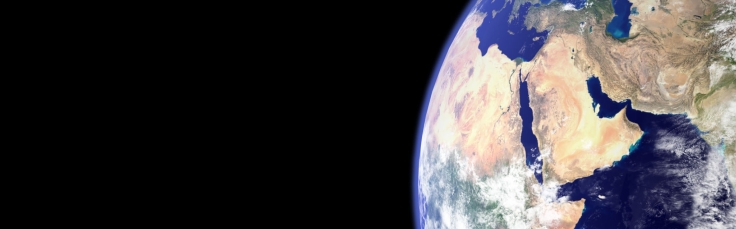
(The image of the Earth is from NASA)

11 Apr 2011

AAAI CAS 2011 Fall Symposium – CFP

Posted by jofr. No Comments

Call for Papers:

Complex Adaptive Systems: Energy, Information, and Intelligence

November 4-6, 2011; Arlington, VA. CFP due date: May 13th.

Complex Adaptive Systems (CAS) and related technologies have proven to be a powerful framework for understanding system-level phenomena across the physical, natural, and social sciences. We characterize a general CAS model as having a significant number of autonomous agents that:

* Utilize one or more levels of feedback;
* Exhibit emergent properties and self-organization;
* Produce non-linear dynamic behavior.

This symposium’s theme addresses fundamental issues for understanding complex phenomena: Energy, Information, and Intelligence. This theme builds upon the previous years’ focus of Threshold Effects (2009) and Resilience, Robustness, and Evolvability (2010). We are inviting papers, extended abstracts, and panel proposals that address one or more of these fundamental properties of Complex Adaptive Systems within any of the physical, natural, artificial, or social sciences.

Energy in a CAS is often more than merely physical energy; it is anything that drives and constrains the system. Agents must cooperate and/or compete for limited resources, whether these resources are “energy,” “power,” “food,” “money,” or some other system resource. The success or failure of various agent strategies depends on their effectiveness in acquiring and utilizing these resources.

Information represents any form of verbal, non-verbal or even non-human communication. Information represents what the agents know or learn about their local environment. Papers relating to the theme of information may, for example, cover signal patterns and effects, signal processing, or information storage (memory). Flows of information itself may also be the focus of CAS research, such as in models of political dissent, social contagion, or the dynamical flows across networks.

Intelligence encompasses how agents react to any information that they acquire from the environment, as well as the system-level properties that emerge from these actions and reactions through patterns of correlated feedbacks. Thus, intelligence may refer to the agents themselves or to the system as a whole. Such intelligence can exist at almost any level of complexity, from simple examples of swarm intelligence to complex human cognition.

Format

Our symposium will have invited talks from leaders in the field, as well as paper presentations on both completed and speculative work. Due to the nature and the novelty of the theme, it is essential to allow ample time for both open-ended and targeted discussions; as such, we will hold panel discussions, round-table talks, and smaller break-out groups to allow for a spirited interaction among participants.

Organizing and Program Committee

Mirsad Hadzikadic, Chair (UNC Charlotte), Ted Carmichael, Co-Chair (UNC Charlotte), Mark Altaweel (University of Chicago), Tony Beavers (University of Evansville), Aaron Bramson (University of Toronto), Patrick Grim (SUNY Stony Brook), Ardeshir Kianercy (University of Southern California), Kiran Lakkaraju (Sandia National Laboratory), Megan Olsen (UMass Amherst), Jonathan Ozik (Argonne National Laboratory), Mark Pizzato (UNC Charlotte), Bill Rand (University of Maryland), Bob Reynolds (Wayne State University), Molly Rorick (Yale University), John Stamper (Carnegie Mellon University), Forrest Stonedahl (Northwestern University), Tina Yu (Memorial University of Newfoundland).

For More Information

For more information about this symposium, and for submission guidelines and links, please visit the supplemental symposium website, the CFP page, or email Co-chair Ted Carmichael at tedsaid at gmail.com.

Tags: ,