There is an interesting new evolutionary psychology book from Paul Keedwell named How Sadness Survived: The Evolutionary Basis of Depression, published by Radcliffe Publishing, 2008. Why should a condition causing so much distress and disability as depression occur so commonly? The thesis of the book is that depression has evolved to avoid the pursuit of unachievable goals. Pursuit of unachievable goals leads obviously to perpetual goal frustration. Giving up unrealistic dreams can often bring the dark feelings of depression to an end. Therefore depression may be a mechanism which has evolved to give up unachievable and unrealistic goals, to withdraw from futile activities, and to conserve energy. It is a mechanism that encourages people to make changes in their life, and to find new goals: by marking all existing goals as unbearable and pointless. Depression can be considered as adaptive in situations where continued effort to pursue a certain goal will result in either danger or loss of valuable resources. In other words, depression is an adaptation to desperate and hopeless situations (i.e. to situations and environments where continued effort to pursue a certain goal will result in either danger or loss of valuable resources.)
And it is useful to request help from others. Keedwell says: “social support and interdependence were important features of the [human] ancestral environment […] the group could have offered extra help to the depressed person until the condition resolved. […] a depressed person may change the attitudes of other people around him, making them more sympathetic to his needs and therefore giving him a long term [social or reproductive] advantage.”
Stress biases decision-making strategies. It makes sense that short-term stress leads to more of the same actions (very strong stress will result in the binary flight or fight action response), while chronic long-term stress leads to less of the same, because it is time to try something new. Basically depression is the demand of the body to try something new, to find new goals, to do less of the actions which led to the current unpleasant situation. As if the body is saying “do anything, but don’t do this anymore”.
P.S. Recent studies have found that depression in form of prolonged stress exposure causes architectural changes in prefrontal dendrites. Chronic stress is known to damage, degenerate and shrink the hippocampus, and it impairs prefrontal cortex-sensitive working memory. A mechanism which degenerates the PFC will help to give up unrealistic dreams and unachievable goals.
Update (14 Mar. 2010) : P.S. Recent articles in the NYTimes and the Economist (named Depression’s Upside and The evolutionary origin of depression) support and confirm the idea that depression is probably linked to how willing someone is to give up his goals. Pain and low mood are warning mechanisms. Both are a natural part in dealing with failure. It is healthy for an organism to experience a decline in motivation if a goal is unreachable or dangerous. Pain stops you doing pursuing goals that damage the physical integrity of the body. Low moods and depression stop you pursuing overly ambitious or unreachable goals in general. In this sense, depression is a natural “give up” mechanism that protects an organism.
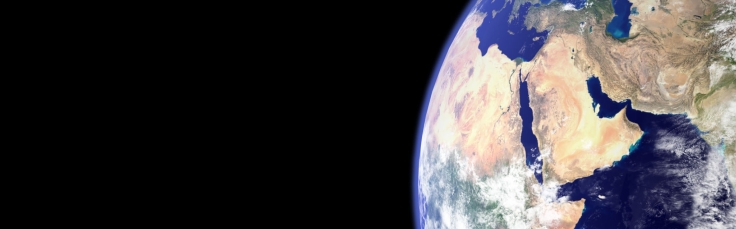
The NASA MESSENGER mission is the first mission sent to orbit the planet closest to the sun. Recently MESSENGER has passed Mercury again and returned high resolution color images. Of course even on a color image the planet looks grey. There is no atmosphere, no water and no life. Look at the following pictures returned from MESSENGER: what a difference between Mercury and Earth, one abundant with life, one with no life at all.
In software development, programs that have grown over a long period of time are synonomus with complex programs. In German we call these applications “historisch gewachsen” (historically grown). It is the excuse for ugly code that smells and should be refactored. In the software world, the question is not: why is it complex? how does complexity emerge at all? Complexity can be found everywhere. Computing’s central challenge is not to produce complexity, but rather to hide, conceal and prevent it, in the words of Dijkstra: How not to make a mess of it.
This is one reason why legacy software is often unpleasant: evolved programs which have a long historical background are nearly always complex, esp. if the requirements evolve over time, too, for example if the application has been adapted to many different customers. In agile development, we use this process to produce an organized, controlled complexity. Thus, in the context of software, the
emergence of complexity is something very natural, because evolved equals complex.
In the context of the everyday life, the emergence of complexity is not a natural process. Things get more disordered by oneself. Ingredients do not assemble themselves to form a cake, and parts do not put themselves together to form a machine. Yet if there is evolution at work – for example if we consider living beings – complexity seems to come for free again. Evolved seems to equal complex,
and in fact complexity can be found everywhere where evolution is at work,
in all living organisms which are subject to evolution
in all evolving complex adaptive systems which have a long historical background
in software development, esp. where systems have grown over a long period of time
(The Wikipedia picture from Thomas Splettstoesser shows T7 RNA polymerase (blue) producing a mRNA (green) from a DNA template (orange))
Steven Johnson says the Web is like a city: built by many people, completely controlled by no one, intricately interconnected and yet functioning as many independent parts. While disaster strikes in one place, elsewhere, life goes on.
This amazing Flickr photo from the Flickr user Gail Johnson shows the ever changing shapes of the swarming starlings. The pattern looks a bit like a fractal strange attractor. By chance? Or is there a deeper reason?
Rodney Brooks at the Singularity Summit about strong AI (here is the video and here is the transcript):
“Before we have the fully general one [general AI], we’re going
to have one that’s almost that good, in the same way
that chimpanzees are almost human, gibbons are almost
chimpanzees, etc. So, it’s not going to happen accidentally.”
There are two kind of “almost AIs”: almost intelligent robots (for war, household or care), or almost intelligent NPC in MMROPGs. What do you think is more likeley?
Jordan Pollack argues in one of his recent papers, Mindless Intelligence, that it was a mistake of AI to focus on symbolic reasoning. The processing of symbols and logical thoughts makes humans minds unique, yet the minds themselves continue to operate on principles that don’t rely on symbols and logical reasoning: “Most of what our brains are doing involves mindless chemical activity not even distinguishable from digestion of the food”. Our minds are built from mindless stuff. Our brains “are not instruction set computers”, as Pollack says, “they’re complicated biological networks with all kinds of feedback at all levels, like metabolisms, gene regulatory networks, and immune systems.”. He defines mindless intelligence as intelligent behavior ascribed (by an observer) to any process lacking a mind-brain:
“we must recognize that many intelligent processes in Nature perform more powerfully than human symbolic reasoning, even though they lack any of the mind-like mechanisms long believed necessary for human “competence.” Once we recognize this and start to work out these scaleable representations and algorithms without anthropomorphizing them, we should be able to produce the kind of results that will get our work funded to the level necessary for growth and deliver beneficial applications to society, without promising the intelligent English-speaking humanoid robot slaves and soldiers of science fiction”
He identifies self-* properties and processes as essential for complex living beings:
“Wherever we look in Nature, we see amazingly complex processes to which we can ascribe intelligence, yet we observe symbolic cognition in only one place, and only there as a result of introspection. Many of these natural processes have been studied under the aegis of complex systems or have been given the prefix ‘self’ or ‘auto.'”
And he argues that examing these self-* processes will bring us closer to the original goals of AI. The problem of AI (or strong AI) is not a problem in the sense of “could it possibly exist?”; it is evidently an engineering problem (see here and here). Since we all agree on AI’s fundamental hypothesis, that physical machines have the capacity for human level intelligence, is there any greater intellectual and engineering challenge ? Pollack says:
“AI, which represents one of the greatest intellectual and engineering challenges in human history—and should command the same fiscal resources as efforts to cure cancer or colonize Mars—is sometimes relegated to a laughingstock, because we can’t prevent bogus claims from cropping up in newspapers and books.”
Jordan Pollack, Mindless Intelligence, IEEE Intelligent Systems May/June (2006) 50-56
Coldplay’s “Viva La Vida” is a short story about a king who’s lost his kingdom. What’s a king without a kingdom? Nothing. Maybe that’s the reason why managers, presidents and directors cling so much to their position. They would not step back even if they are no longer needed: they would feel like a king who has lost his kingdom. They would be no longer something. In Coldplay’s words:
I used to rule the world
Seas would rise when I gave the word
Now in the morning I sleep alone
Sweep the streets I used to own
I used to roll the dice
Feel the fear in my enemy’s eyes
Listened as the crowd would sing
“Now the old king is dead, long live the king”
One minute I held the key
Next the walls were closed on me
And I discovered that my castles stand
Upon pillars of salt and pillars of sand
 There is an interesting new evolutionary psychology book from Paul Keedwell named How Sadness Survived: The Evolutionary Basis of Depression, published by Radcliffe Publishing, 2008. Why should a condition causing so much distress and disability as depression occur so commonly? The thesis of the book is that depression has evolved to avoid the pursuit of unachievable goals. Pursuit of unachievable goals leads obviously to perpetual goal frustration. Giving up unrealistic dreams can often bring the dark feelings of depression to an end. Therefore depression may be a mechanism which has evolved to give up unachievable and unrealistic goals, to withdraw from futile activities, and to conserve energy. It is a mechanism that encourages people to make changes in their life, and to find new goals: by marking all existing goals as unbearable and pointless. Depression can be considered as adaptive in situations where continued effort to pursue a certain goal will result in either danger or loss of valuable resources. In other words, depression is an adaptation to desperate and hopeless situations (i.e. to situations and environments where continued effort to pursue a certain goal will result in either danger or loss of valuable resources.)


