« Older Entries Newer Entries » Subscribe to Latest Posts

1 Oct 2008

Orchestra Without Conductor

Posted by jofr. No Comments

Recently I posted about a video of Johannes Brahms’s Piano Concerto No.1 played by Arthur Rubinstein and the Royal Concertgebouw Orchestra with conductor Bernard Haitink. Here is another video showing Herbert von Karajan conducting Beethoven’s Symphony No. 3 in E Flat Major, Op. 55


He looks indispensable, but in fact the orchestra could play without him as well. He hasn’t even written the notes. Does an orchestra really need a conductor or not? As long as everyone has detailed notes and instructions, the organization is clear, and a central conductor, director or leader is not really needed. This does not mean that the system can organize itself, it only means that enough laws and rules already exist to organize the system.

Here is the same symphony directed by Claudio Abbado. You will here some minor differences – some notes are shorter – but after all it is still Beethoven who makes the music great. Neither Abbado nor Karajan manage to obscure Beethoven’s gem. The orchestra – here the Berlin Philharmonic Orchestra – doesn’t really need them. By the way, the Berlin Philharmonic Orchestra determines it’s director itself by election.


The question if an orchestra needs a central conductor is similar to the question if a company needs a CEO, a country a president or a church a bishop. My opinion is that in organizations (whether countries or companies doesn’t matter) leadership is needed especially if the company or country has just been created (to define a direction) or needs organizational change (to redefine the direction and organization). In the meantime, the CEO or president is often superfluous. Leadership is needed especially if the company or country has just been created (to define a direction) or needs organizational change (to redefine the direction and organization). In the meantime, the CEO or president is often superfluous.

If a country is newly founded, then the parliament is often quite small. During the years, it grows constantly, and the number of delegates and members gets larger every year (as well as their ample salary and their pensions, which are determined by themselves). If the country is old, it suffers from a large parliament and huge bureaucracy. It should be the opposite way round: if a country is newly founded, then the parliament needs to be large, if it is old, it can be smaller.

With companies it is similar: If a country is newly founded, then the executive board and management body is often quite small. During the years, it grows constantly, and the number of directors and managers gets larger every year (as well as their ample salary which is partially determined by themselves). Again it should be the opposite way round: if a company is newly founded, then the executive board and management body needs to be large (to work out business plans, strategies, policies and all that corporate governance stuff), if it is old and the company is running well it can be smaller.

The same argument applies to an orchestra. A conductor is certainly need at the beginning, to synchronize the start, and at the end, to synchronize the ending, and perhaps in the middle to help those who have long breaks (during “organizational change”). All the rest is basically a “show”, because all musicians have detailed notes, even for the breaks. The conductor is maybe needed before the actual performance, in order to rehearse the composition, to define the direction: to set the general tempo and speed, to modulate the volume, and to evaluate the overall sound.

In team sports, teams usually don’t organize themselves. Every team member has a clear role (for instance goal keeper – defender – midfielder – striker) determined by the coach or trainer, who also sets the overall strategy. The trainer is needed at the beginning in order to form a team, and during times of change if the team is reorganized (for example during a game if a player needs to be exchanged).

Therefore the questions remain

(1) why do orchestras have a conductor (companies
a CEO, countries a president, teams a trainer..)
if they do not really need it ?

(2) is an orchestra without a conductor (a company
without a CEO, a country without a president, a
team without a trainer..) a form of self-organization ?

The answer to the first question is perhaps that an conductor or organizer is especially needed to setup the organization. Once the organization is clarified and written down somewhere, he is no longer needed constantly, at least he does not need to be present permanently. The problem is that once they have the power to rule, the founders, managers, directors and presidents don’t want to give off/up power again. Although they are no longer needed permanently, they stay around because they are hungry for power.

There would be a more efficient method to manage a system, but it is not possible because greedy managers don’t want to give up power. The most efficient method to manage a system with a set of manager is a flexible and dynamic hierarchy. As long as no management is need, the hierarchy remains flat or empty, and the management positions are only occupied if there is really a need for management. In real life this is hardly possible, because a manager will defend his position even it is no longer necessary for the whole system: a president will defend its own position even if he not needed currently, a conductor will stress its own position even if he not necessary, and a CEO, CTO or CIO may defend its own position even it is no longer necessary for the company. This is a major drawback of self-management. Although the best way to organize something is probably to find someone who feels personally responsible for it, he may continue to stand up for it even if it the thing becomes obsolete.

The answer to the second question is no, an orchestra without a conductor may exist, but it is not necessarily a form of self-organization. The organization can also be written down somewhere, for example in form of laws, instructions, detailed notes or sheets of music. Thus if we observe a system which is like an orchestra without a conductor – for instance a living being consisting of countless cells or the brain which does not contain a central neuron that plays the role of a “conductor” – we have to be careful. Each cell follows the rules of the genes, just as each musician follows the rules of the notes. And in the brain there are several interrelated processes at work, it grows, it modulates itself, it learns, it adapts itself, and everything is stronlgy influenced and organized by the environment.

An orchestra without conductor does not always mean that the system organizes itself completely. There are many different ways to organize a system. It is certainly difficult to organize a system completely without any organizer or manager, but once you have managers, it is often difficult to get rid of them.

29 Sep 2008

Emergence Videos

Posted by jofr. No Comments

A series of two videos about Emergence featuring John H. Holland.
The first part explains some basic features of swarm intelligence


In the second part Holland talks about his first experiences with “emergence”.

28 Sep 2008

Brahms Piano Concerto No. 1 in D minor

Posted by jofr. No Comments

“Without craftsmanship, inspiration is a mere reed shaken in the wind”
-Johannes Brahms, German composer (1833-1897)

Arthur Rubinstein plays the first movement of Brahms
Piano Concerto No. 1 in D minor (Op. 15). Contrary to Mozart’s
27 Piano Concertos and the 5 from Beethoven, Brahms has
only written 2, but they are very impressive. The first movement
“Maestoso” is colossal, lasting between 20 to 25 minutes. This
is the first part, the second part and the third part can be found
at YouTube.

25 Sep 2008

John H. Holland about CAS

Posted by jofr. No Comments

John H. Holland has written a new article in “The Scientist” about CAS. In this article named Biology’s Gift to a Complex World, he talks about his work and how he met the people from the SFI: Murray Gell-Mann, George Cowan, Brian Arthur, Doyne Farmer and Norm Packard. He says about CAS (by the way these are the CAS I had in mind when I founded the CAS-group, site and blog, CAS does not stand for central authentication service):

I’ve applied genetic algorithms to the area I know and like best: complex adaptive systems. These are systems that have multiple levels of co-evolution, like ecosystems, which through their complex interactions, become more than the sum of their parts. One example is the immune system, a conglomerate of cells, cytokines and proteins, containing many levels of interaction and adaptation which provide the power to protect a human from the majority of pathogens encountered. To be able to capture the essence of these complex adaptive systems is to be able to predict their most powerful abilities.
..
The complex systems that I was interested in were those whose parts not only interacted to create novel properties, but also co-evolved and adapted new rules to weather the fluctuations in their environment. I called them ‘complex adaptive systems’ or CAS

And about the common elements and emergent properties of CAS:

At the outset, it may not seem that complex adaptive systems such as the immune system, the economic function of a city, and tropical rainforests could have much in common. But all CAS involve a diverse array of agents that adapt and learn from their interactions with one another. An individual’s immune system is built upon an array of cells, proteins, and chemical factors that are constantly in flux. This vast system of interacting elements responds to all manner of pathogenic threats, protects the body from too much inflammation and even records to memory its fighting strategy so it can be efficient the next time it encounters the same pathogen. The buyers and sellers that comprise the economic infrastructure of a city and the diverse species in a rainforest act in similar ways. The key is to categorize the similarities across them in order to develop a working theory of all complex adaptive systems

In looking for common elements in these complex adaptive systems, we see that all CAS exhibit lever points – points at which a small effort can produce a desired, directed effect. In the immune system, a vaccine would be an example of a lever point. From an engineering perspective, a vaccine is a solution that, with the relatively small effort of inactivating a virus or bacterium, produces a large effect: protecting an entire population from that pathogen. A virologist might design a vacine by searching for the most immunogenic portion of the pathogen. From a CAS perspective, the solution or lever point could be something much different: perhaps a combination of cytokines or the timing of administration that provides critical advantage. Just as genetic algorithms find solutions that are messier but more effective than a human would design, so a theory of CAS would find solutions that might not be obvious to the virologist. A theory of CAS would eliminate the trial and error. On a broader scale, a theory of CAS would let us transfer well-known results about one CAS to other CAS where data or understanding is lacking

About a theory of CAS:

In order to build that theorem, we are characterizing the agents or parts of a system in a way that is as general as possible, and then using genetic algorithms to simulate the learning between our modeled parts. To construct CAS agents we must first characterize the building blocks that will represent the agent in our theorem, as well as the rules that govern their interaction or combination. With our model of economic systems, we saw how genetic algorithms could recombine rules to form new methods of interacting. Our model of CAS would not only recombine the building blocks of the system, but also the rules by which they interact.

My strategy for finding a theorem that can predicts lever points is to study how novel properties emerge from aggregates of building blocks. For example, the aggregate of immune cells – the proteins and cytokines – protects a human from pathogenic invasion. But this conglomerate of cells also confers immunologic identity between individuals, a so-called emergent property of that system. A good theory of CAS would be able to predict the emergent properties, such as immune identity, which would show us where to look for the lever points of a system.

Tags: ,

21 Sep 2008

Can we make software that comes to life?

Posted by jofr. 1 Comment

The Telegraph has an article named Can we make software that comes to life? Can we? Yes, why not. It should be possible. And if we really make software that comes to life, then evolution will enter a new phase indeed. Basically there are two ways: either we build a robot like WALL-E, the hero in Pixar’s new masterwork i.e. a robot that moves around in the real word, or an agent that moves around in a virtual world. Since evolution is the basic principle behind all forms of life, it is probably also the way to ALife, esp. if we think of the complexity typical for all life-forms.

Yet ALife scientists and resarchers working on artificial evolutionary systems have been unable to produce complex ALife. Something seems to be missing in our understanding of how evolution produced complex creatures. Is the vital essence that is missing just a complexity threshold or some unkown principle? Rodney Brooks says in his book flesh and machines that something essential in AI and ALife is still missing. He calls it “the Juice”, and argues that it is some important principle, equation or theory which we simply have not discovered yet.

It is true that the results of AI, ALife and artificial evolutionary systems are disappointing. So what’s missing? How can we go beyond AI as we know it? If there is a theory missing, it is maybe something along the lines of Wolfram’s “New Kind of Science”.. Maybe. The problem is that we just don’t think in fractal patterns or in strange attractors. It’s just ordinary language. Probably the basic principles are already understood and the fundamental metaphors have been found: society as mind, genes as selfish individuals,..

Humans have tried to understand how the mind works for thousands of years. Sometimes the first idea is the best. And the first idea was the belief in gods and the soul. Both occurred together: when the first humans with self-consciousness appeared, the first cultures and religions emerged, too. The belief in “god” as the spirit of the group, and in the “soul” as the spirit of the self occurred at the same time. I belief in myself, therefore I am.

The proverb “to err is human” captures a deep truth: the ultimate error is the belief in the own existence. Only a machine which cannot explain or understood itself can understand itself in terms of a single self – by developing a sense of self-consciousness. A machine which could understood itself would hardly develop a sense of self in the first place.

But many animals don’t even understand the environment, although they are able to survive in it very well. All animals except humans do not reach our levels of intelligence, even if we try to teach them they are not able to learn language. They are below some cognitive complexity threshold. Cats reach their full size in a half year, even big bears in 2-3 years. Humans take 20 years to grow up, and they learn all these years every day new things. Have we build a machine or an agent which is able to learn 20 years? I think it is’s complexity threshold: to build an adaptive agent which is able to match the vast complexity of a whole world in a tiny space.

Similar to the quest of quantum gravity, it is the attempt to match the very large and the very small, the infinite and the infinitesimal: It means to put a world in a grain of sand – if a brain is like a grain of sand. Again this has been said before by William Blake..

19 Sep 2008

Multi-Level Evolution in Many Dimensions

Posted by jofr. No Comments

Eva Jablonka and Marion Lamb identify in their book Evolution in Four Dimensions: Genetic, Epigenetic, Behavioral, and Symbolic Variation in the History of Life four “dimensions” in evolution – four inheritance systems that play a role in evolution. These four dimensons are: genetic, epigenetic (or non-DNA cellular transmission of traits), behavioral, and memetic or symbolic (transmission through language and other forms of symbolic communication). Interesting viewpoint. In general, any inheritance system that provides variations on which natural selection acts can be considered as an evolutionary system.

Tags:

19 Sep 2008

Cures out of Chaos

Posted by jofr. No Comments

Do discoveries come from hard work or from sheer accidents? A book named „Cures out of Chaos“ by Daniel Podolsky argues that serendipity, intuition, luck, and laboratory accidents have played important roles in major scientific discoveries. The accidental discovery of Penicillin by Sir Alexander Fleming is a good example. Although most medical discoveries did in fact occur by chance and luck, pure luck is not enough – Fleming for instance was already well-known from his earlier work, and had developed a reputation as a brilliant researcher. Both is required: hard work and sheer accidents. In the words of Louis Pasteur, one could say “chance favors the prepared mind”.

19 Sep 2008

Steven Strogatz – Nonlinear Dynamics and Chaos

Posted by jofr. No Comments

Musical Variations from a Chaotic Mapping

18 Sep 2008

Example for emergence: painting

Posted by jofr. No Comments

A painting is a nice example for a simple case of emergence. Consider for example a classic painting from Rembrandt, like his self-portrait on the left hand. It can be resolved into a frame, a canvas and the different chemical substances which produce certain colors. If we resolve the painting into these different substances, the painting itself gets lost, which arises in the creative process of combining colors with different intensity. The painting emerges from the unique combination of colored points, strokes and lines created by the painter.

17 Sep 2008

A stormy atlantic

Posted by jofr. No Comments

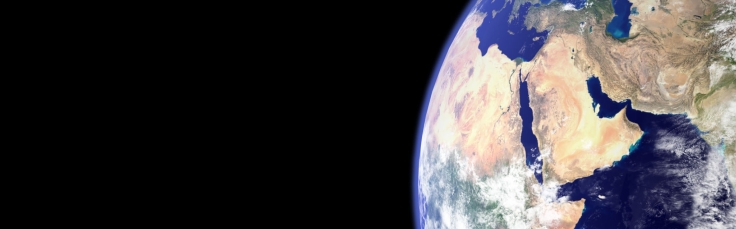
A nice NASA picture of the earth with tropical storms lined up across the Atlantic: